Renowned Speculator Reveals…

The #1 Bitcoin Stock

(Don’t miss what could be your final chance to capture life-changing profits from this unstoppable trend.)

Did you know that most of Bitcoin's annual gains come from just ten days?

It’s true—Bitcoin’s most explosive moves tend to happen fast…

And usually after fear has gripped the market and shaken out the weak hands.

That’s why so many people miss out on fortunes in Bitcoin—and later kick themselves for it.

The opportunity cost of missing out on those 10 days is absolutely staggering…

But here’s the good news: It’s not too late.

In fact, today’s situation may offer one last, historic window to earn outsized Bitcoin profits—if you know where to look.

That’s why this could be the most important financial dispatch you read all year.

We believe a rare, time-sensitive opportunity is unfolding right now—one that 99.9% of investors are blind to.


And that’s a shame…

Because this may be the only chance the average investor ever gets to front-run the biggest players on Earth:


Hedge funds. Insiders. Billionaires. Tech giants. Even nation-states.

How?


By getting positioned before them in a tiny group of stocks that could massively outperform Bitcoin itself—by orders of magnitude.


Let us explain…

Bitcoin remains deeply misunderstood by the mainstream.


But that’s exactly what makes this so exciting.

This kind of information asymmetry only comes along once in a generation—and it gives smart, nimble speculators a shot at life-changing upside.

Sure, simply buying Bitcoin could lead to solid gains.


But the real opportunity lies elsewhere…

In a select few small-cap stocks riding the Bitcoin megatrend—stocks you can buy today through any regular brokerage account.

These are the companies that have historically soared 30x… 70x… even over 100x—making Bitcoin’s own returns look tame by comparison.

Take a look at the chart below.

During one of Bitcoin’s previous 11x bull runs, several little-known Bitcoin stocks exploded by 32x, 75x, and even more than 100x—all in the same time frame.


The best-performing Bitcoin stock delivered a jaw-dropping 10,118% gain in just over a year.

That’s more than a 100x return—enough to turn a modest $5,000 investment into over $500,000… in a matter of months.

Now compare that to Bitcoin itself over the same period:

A $5,000 investment in Bitcoin would have grown to just $57,300.

Not bad, of course.


But it’s only a fraction of what you could have made by owning the right Bitcoin stock.


Same trend. Same timeframe.


Wildly different results.

Of course, these were the best-case scenarios—not every Bitcoin stock was a winner. And as always, past performance is no guarantee of future results.

But here’s the bottom line:

Bitcoin stocks have the potential to dramatically outperform Bitcoin itself—often by 10x, 20x, or even more.


And they can do it fast.


So if Bitcoin surges another 10x—which it’s done multiple times before—don’t be surprised if the top Bitcoin stocks skyrocket 32x, 75x, or even higher.

Now imagine what just one trade like that could do for your future…

  • You wouldn't have to work again… or worry about scraping by in retirement.
  • You could travel the world in First Class.
  • You could buy a new vacation home on the beach.
  • You could have more than enough left over to support your family or leave a lasting legacy

Imagine multiplying your money by 10x… 32x… 75x—or even more—in just a matter of months.

That’s exactly the kind of opportunity we’re targeting here.

We believe Bitcoin is on the verge of its next major move—and a select group of tiny, overlooked Bitcoin stocks could deliver even bigger returns.

Yet hardly anyone knows they exist.

Why? Because they’re small… under the radar… and completely off the mainstream’s radar—for now.

Let’s be clear:

  • You do NOT need to buy any cryptocurrency.
  • You do NOT need to trade options.
  • You do NOT need to use margin, debt, or other complicated strategies.

All you need is a regular brokerage account—the kind you probably already have.

And today, we’re going to break it all down for you—step by step—so you can position yourself before this next move takes off.

Remember, the majority of Bitcoin’s biggest gains tend to occur in just ten days per year…


And most people miss them.


Don’t let that happen to you.

This could be your final shot to ride the Bitcoin megatrend for truly transformative profits—before the rest of the world catches on.


What You Need to Know Right Now

We’re going to break down the Bitcoin megatrend into one simple insight—something so clear that anyone can understand it.

Once you grasp this core idea, you’ll begin to see what 99.9% of people completely miss.

To recognize the enormous profit opportunity in front of us today, it’s critical to first understand what most people misunderstand about gold, money, and Bitcoin.

For over 5,000 years, gold has been mankind’s most enduring form of money.

It didn’t earn that status because a king or politician declared it so.

Gold became money because, across time and across civilizations, countless people reached the same conclusion—independently:


Gold is money.

It was the result of a market process—a process of individuals searching for the best way to store and exchange value.

So why gold?

Because it possesses a unique combination of traits that make it ideal as money:

Gold is durable, divisible, consistent, convenient, scarce—and above all, it’s the hardest of all physical commodities.

Now, let’s clarify what we mean by “hard.”

It doesn’t refer to physical hardness. Instead, it means “hard to produce.”

The harder it is to increase a money’s supply, the better it is at preserving value.


That’s why hardness is the most important quality of sound money.


By contrast, “easy money” is easy to produce—and easy to debase.

Think about it…

Would you trust your life savings to something others can create effortlessly, like arcade tokens or airline miles?

Of course not.


But that’s not so different from government currencies today—they’re created at will, with no effort.


True money must resist inflation. That’s what gives it long-term value.

And that’s why gold, as the most resistant to supply inflation, has reigned supreme for millennia.

The history of money is clear:


The hardest asset wins.


But now, for the first time in history…


Gold has a serious challenger.


The “Hardest” Money Mankind Has Ever Known

In monetary terms, “hardness” refers to how difficult it is to increase an asset’s supply.


It’s not just a concept—it can be measured:


Hardness = Supply Growth Rate


(Annual new supply ÷ Total existing stockpiles)


The lower the supply growth rate, the harder the asset—and the better it tends to perform as a long-term store of value.


For most of recorded history, gold has held the title of the hardest asset known to man.


That’s a key reason why it has served as the world’s premier form of money for over 5,000 years.


According to the World Gold Council, there are approximately 6.8 billion ounces of mined gold in existence today. Annual production adds about 117 million ounces.

That puts gold’s supply growth rate at just 1.7% per year—a figure that has remained remarkably stable over time.


No matter how hard we try—no matter how many mines we open—we simply can’t inflate gold’s supply by more than 1–2% annually.


This is gold’s secret weapon as money:


Its resistance to inflation and debasement.


Take a look at the chart below, and you’ll see that no other physical commodity even comes close to gold’s low supply growth rate.


By contrast, industrial commodities often have supply growth rates that exceed 100% per year.

That’s because they’re rapidly consumed by industrial processes—meaning there’s little or no stockpile to compare new production against.

This high variability makes their prices highly sensitive to changing industrial conditions.


And that makes them unreliable as a store of value—a core requirement for any true form of money.


Now Enter: Bitcoin

No other physical commodity comes close to gold’s low supply growth rate and resistance to debasement.

No other physical commodity comes close to gold’s low supply growth rate and resistance to debasement.

It’s the most important reason gold has been the best money in the world for over 5,000 years.

A high supply growth rate means new production can easily influence the overall supply—and prices.

Annual production for industrial commodities can sometimes far exceed existing stockpiles, which means the supply growth rate is more than 100%.


That’s because stockpiles for industrial commodities are low as industrial processes constantly use them up.


It’s not desirable for an asset to function as a store of value if its price is hostage to the whims of ever-changing industrial conditions.

That’s why it’s a big problem for an asset with a high supply growth rate to serve as a store of value, an essential function of money.

Bitcoin shares many of the same attributes of gold that make it attractive as money. That’s why many refer to it as “digital gold.”

Like gold, Bitcoin does not have counterparty risk, and nobody can arbitrarily inflate the supply.

It’s crucial to note here that none of the other 20,000 cryptocurrencies are genuinely scarce, like Bitcoin.

They all have key players, insiders, and development teams that can inflate the supply or change the rules if they choose to.

In short, all other cryptos have artificial scarcity and are not hard assets.

Instead, they are more like frequent flyer miles and arcade tokens.

By contrast, Bitcoin takes humans out of the equation.

Nobody can change Bitcoin’s supply—not even Elon Musk, Jeff Bezos, the Chinese government, the US government, or any of these powerful entities combined.

Even if Satoshi Nakamoto—Bitcoin’s anonymous Cypherpunk creator—returned after disappearing in 2011, he could not alter Bitcoin.

That’s what gives Bitcoin genuine scarcity and credibility as a neutral money.

It’s the essential difference between Bitcoin and all other cryptocurrencies and why no other possesses the monetary properties of Bitcoin.

Bitcoin’s supply growth rate today is about 0.8%, about half of gold’s (1.7%).

That means Bitcoin’s hardness is about twice that of gold’s.

It’s the most important reason gold has been the best money in the world for over 5,000 years.

A high supply growth rate means new production can easily influence the overall supply—and prices.

Annual production for industrial commodities can sometimes far exceed existing stockpiles, which means the supply growth rate is more than 100%.

No other physical commodity comes close to gold’s low supply growth rate and resistance to debasement.

It’s the most important reason gold has been the best money in the world for over 5,000 years.

A high supply growth rate means new production can easily influence the overall supply—and prices.

Annual production for industrial commodities can sometimes far exceed existing stockpiles, which means the supply growth rate is more than 100%.


That’s because stockpiles for industrial commodities are low as industrial processes constantly use them up.


It’s not desirable for an asset to function as a store of value if its price is hostage to the whims of ever-changing industrial conditions.

That’s why it’s a big problem for an asset with a high supply growth rate to serve as a store of value, an essential function of money.

Bitcoin shares many of the same attributes of gold that make it attractive as money. That’s why many refer to it as “digital gold.”

Like gold, Bitcoin does not have counterparty risk, and nobody can arbitrarily inflate the supply.

It’s crucial to note here that none of the other 20,000 cryptocurrencies are genuinely scarce, like Bitcoin.

They all have key players, insiders, and development teams that can inflate the supply or change the rules if they choose to.

In short, all other cryptos have artificial scarcity and are not hard assets.

Instead, they are more like frequent flyer miles and arcade tokens.

By contrast, Bitcoin takes humans out of the equation.

Nobody can change Bitcoin’s supply—not even Elon Musk, Jeff Bezos, the Chinese government, the US government, or any of these powerful entities combined.

Even if Satoshi Nakamoto—Bitcoin’s anonymous Cypherpunk creator—returned after disappearing in 2011, he could not alter Bitcoin.

That’s what gives Bitcoin genuine scarcity and credibility as a neutral money.

It’s the essential difference between Bitcoin and all other cryptocurrencies and why no other possesses the monetary properties of Bitcoin.

Bitcoin’s supply growth rate today is about 0.8%, about half of gold’s (1.7%).

That means Bitcoin’s hardness is about twice that of gold’s.


No other physical commodity comes close to gold’s low supply growth rate and resistance to debasement.

It’s the most important reason gold has been the best money in the world for over 5,000 years.

A high supply growth rate means new production can easily influence the overall supply—and prices.

Annual production for industrial commodities can sometimes far exceed existing stockpiles, which means the supply growth rate is more than 100%.


That’s because stockpiles for industrial commodities are low as industrial processes constantly use them up.


It’s not desirable for an asset to function as a store of value if its price is hostage to the whims of ever-changing industrial conditions.

That’s why it’s a big problem for an asset with a high supply growth rate to serve as a store of value, an essential function of money.

Bitcoin shares many of the same attributes of gold that make it attractive as money. That’s why many refer to it as “digital gold.”

Like gold, Bitcoin does not have counterparty risk, and nobody can arbitrarily inflate the supply.

It’s crucial to note here that none of the other 20,000 cryptocurrencies are genuinely scarce, like Bitcoin.

They all have key players, insiders, and development teams that can inflate the supply or change the rules if they choose to.

In short, all other cryptos have artificial scarcity and are not hard assets.

Instead, they are more like frequent flyer miles and arcade tokens.

By contrast, Bitcoin takes humans out of the equation.

Nobody can change Bitcoin’s supply—not even Elon Musk, Jeff Bezos, the Chinese government, the US government, or any of these powerful entities combined.

Even if Satoshi Nakamoto—Bitcoin’s anonymous Cypherpunk creator—returned after disappearing in 2011, he could not alter Bitcoin.

That’s what gives Bitcoin genuine scarcity and credibility as a neutral money.

It’s the essential difference between Bitcoin and all other cryptocurrencies and why no other possesses the monetary properties of Bitcoin.

Bitcoin’s supply growth rate today is about 0.8%, about half of gold’s (1.7%).

That means Bitcoin’s hardness is about twice that of gold’s.

That’s because stockpiles for industrial commodities are low as industrial processes constantly use them up.

No other physical commodity comes close to gold’s low supply growth rate and resistance to debasement.

It’s the most important reason gold has been the best money in the world for over 5,000 years.

A high supply growth rate means new production can easily influence the overall supply—and prices.

Annual production for industrial commodities can sometimes far exceed existing stockpiles, which means the supply growth rate is more than 100%.


That’s because stockpiles for industrial commodities are low as industrial processes constantly use them up.


It’s not desirable for an asset to function as a store of value if its price is hostage to the whims of ever-changing industrial conditions.

That’s why it’s a big problem for an asset with a high supply growth rate to serve as a store of value, an essential function of money.

Bitcoin shares many of the same attributes of gold that make it attractive as money. That’s why many refer to it as “digital gold.”

Like gold, Bitcoin does not have counterparty risk, and nobody can arbitrarily inflate the supply.

It’s crucial to note here that none of the other 20,000 cryptocurrencies are genuinely scarce, like Bitcoin.

They all have key players, insiders, and development teams that can inflate the supply or change the rules if they choose to.

In short, all other cryptos have artificial scarcity and are not hard assets.

Instead, they are more like frequent flyer miles and arcade tokens.

By contrast, Bitcoin takes humans out of the equation.

Nobody can change Bitcoin’s supply—not even Elon Musk, Jeff Bezos, the Chinese government, the US government, or any of these powerful entities combined.

Even if Satoshi Nakamoto—Bitcoin’s anonymous Cypherpunk creator—returned after disappearing in 2011, he could not alter Bitcoin.

That’s what gives Bitcoin genuine scarcity and credibility as a neutral money.

It’s the essential difference between Bitcoin and all other cryptocurrencies and why no other possesses the monetary properties of Bitcoin.

Bitcoin’s supply growth rate today is about 0.8%, about half of gold’s (1.7%).

That means Bitcoin’s hardness is about twice that of gold’s.


No other physical commodity comes close to gold’s low supply growth rate and resistance to debasement.

It’s the most important reason gold has been the best money in the world for over 5,000 years.

A high supply growth rate means new production can easily influence the overall supply—and prices.

Annual production for industrial commodities can sometimes far exceed existing stockpiles, which means the supply growth rate is more than 100%.


That’s because stockpiles for industrial commodities are low as industrial processes constantly use them up.


It’s not desirable for an asset to function as a store of value if its price is hostage to the whims of ever-changing industrial conditions.

That’s why it’s a big problem for an asset with a high supply growth rate to serve as a store of value, an essential function of money.

Bitcoin shares many of the same attributes of gold that make it attractive as money. That’s why many refer to it as “digital gold.”

Like gold, Bitcoin does not have counterparty risk, and nobody can arbitrarily inflate the supply.

It’s crucial to note here that none of the other 20,000 cryptocurrencies are genuinely scarce, like Bitcoin.

They all have key players, insiders, and development teams that can inflate the supply or change the rules if they choose to.

In short, all other cryptos have artificial scarcity and are not hard assets.

Instead, they are more like frequent flyer miles and arcade tokens.

By contrast, Bitcoin takes humans out of the equation.

Nobody can change Bitcoin’s supply—not even Elon Musk, Jeff Bezos, the Chinese government, the US government, or any of these powerful entities combined.

Even if Satoshi Nakamoto—Bitcoin’s anonymous Cypherpunk creator—returned after disappearing in 2011, he could not alter Bitcoin.

That’s what gives Bitcoin genuine scarcity and credibility as a neutral money.

It’s the essential difference between Bitcoin and all other cryptocurrencies and why no other possesses the monetary properties of Bitcoin.

Bitcoin’s supply growth rate today is about 0.8%, about half of gold’s (1.7%).

That means Bitcoin’s hardness is about twice that of gold’s.

It’s not desirable for an asset to function as a store of value if its price is hostage to the whims of ever-changing industrial conditions.

That’s why it’s a big problem for an asset with a high supply growth rate to serve as a store of value, an essential function of money.

Bitcoin shares many of the same attributes of gold that make it attractive as money. That’s why many refer to it as “digital gold.”

Like gold, Bitcoin does not have counterparty risk, and nobody can arbitrarily inflate the supply.

It’s crucial to note here that none of the other 20,000 cryptocurrencies are genuinely scarce, like Bitcoin.

They all have key players, insiders, and development teams that can inflate the supply or change the rules if they choose to.

In short, all other cryptos have artificial scarcity and are not hard assets.

Instead, they are more like frequent flyer miles and arcade tokens.

By contrast, Bitcoin takes humans out of the equation.

Nobody can change Bitcoin’s supply—not even Elon Musk, Jeff Bezos, the Chinese government, the US government, or any of these powerful entities combined.

Even if Satoshi Nakamoto—Bitcoin’s anonymous Cypherpunk creator—returned after disappearing in 2011, he could not alter Bitcoin.

That’s what gives Bitcoin genuine scarcity and credibility as a neutral money.

It’s the essential difference between Bitcoin and all other cryptocurrencies and why no other possesses the monetary properties of Bitcoin.

Bitcoin’s supply growth rate today is about 0.8%, about half of gold’s (1.7%).

That means Bitcoin’s hardness is about twice that of gold’s.

No other physical commodity comes close to gold’s low supply growth rate and resistance to debasement.

No other physical commodity comes close to gold’s low supply growth rate and resistance to debasement.

No other physical commodity comes close to gold’s low supply growth rate and resistance to debasement.

It’s the most important reason gold has been the best money in the world for over 5,000 years.

A high supply growth rate means new production can easily influence the overall supply—and prices.

Annual production for industrial commodities can sometimes far exceed existing stockpiles, which means the supply growth rate is more than 100%.


That’s because stockpiles for industrial commodities are low as industrial processes constantly use them up.


It’s not desirable for an asset to function as a store of value if its price is hostage to the whims of ever-changing industrial conditions.

That’s why it’s a big problem for an asset with a high supply growth rate to serve as a store of value, an essential function of money.

Bitcoin shares many of the same attributes of gold that make it attractive as money. That’s why many refer to it as “digital gold.”

Like gold, Bitcoin does not have counterparty risk, and nobody can arbitrarily inflate the supply.

It’s crucial to note here that none of the other 20,000 cryptocurrencies are genuinely scarce, like Bitcoin.

They all have key players, insiders, and development teams that can inflate the supply or change the rules if they choose to.

In short, all other cryptos have artificial scarcity and are not hard assets.

Instead, they are more like frequent flyer miles and arcade tokens.

By contrast, Bitcoin takes humans out of the equation.

Nobody can change Bitcoin’s supply—not even Elon Musk, Jeff Bezos, the Chinese government, the US government, or any of these powerful entities combined.

Even if Satoshi Nakamoto—Bitcoin’s anonymous Cypherpunk creator—returned after disappearing in 2011, he could not alter Bitcoin.

That’s what gives Bitcoin genuine scarcity and credibility as a neutral money.

It’s the essential difference between Bitcoin and all other cryptocurrencies and why no other possesses the monetary properties of Bitcoin.

Bitcoin’s supply growth rate today is about 0.8%, about half of gold’s (1.7%).

That means Bitcoin’s hardness is about twice that of gold’s.

It’s the most important reason gold has been the best money in the world for over 5,000 years.

A high supply growth rate means new production can easily influence the overall supply—and prices.

Annual production for industrial commodities can sometimes far exceed existing stockpiles, which means the supply growth rate is more than 100%.

No other physical commodity comes close to gold’s low supply growth rate and resistance to debasement.

It’s the most important reason gold has been the best money in the world for over 5,000 years.

A high supply growth rate means new production can easily influence the overall supply—and prices.

Annual production for industrial commodities can sometimes far exceed existing stockpiles, which means the supply growth rate is more than 100%.


That’s because stockpiles for industrial commodities are low as industrial processes constantly use them up.


It’s not desirable for an asset to function as a store of value if its price is hostage to the whims of ever-changing industrial conditions.

That’s why it’s a big problem for an asset with a high supply growth rate to serve as a store of value, an essential function of money.

Bitcoin shares many of the same attributes of gold that make it attractive as money. That’s why many refer to it as “digital gold.”

Like gold, Bitcoin does not have counterparty risk, and nobody can arbitrarily inflate the supply.

It’s crucial to note here that none of the other 20,000 cryptocurrencies are genuinely scarce, like Bitcoin.

They all have key players, insiders, and development teams that can inflate the supply or change the rules if they choose to.

In short, all other cryptos have artificial scarcity and are not hard assets.

Instead, they are more like frequent flyer miles and arcade tokens.

By contrast, Bitcoin takes humans out of the equation.

Nobody can change Bitcoin’s supply—not even Elon Musk, Jeff Bezos, the Chinese government, the US government, or any of these powerful entities combined.

Even if Satoshi Nakamoto—Bitcoin’s anonymous Cypherpunk creator—returned after disappearing in 2011, he could not alter Bitcoin.

That’s what gives Bitcoin genuine scarcity and credibility as a neutral money.

It’s the essential difference between Bitcoin and all other cryptocurrencies and why no other possesses the monetary properties of Bitcoin.

Bitcoin’s supply growth rate today is about 0.8%, about half of gold’s (1.7%).

That means Bitcoin’s hardness is about twice that of gold’s.


No other physical commodity comes close to gold’s low supply growth rate and resistance to debasement.

It’s the most important reason gold has been the best money in the world for over 5,000 years.

A high supply growth rate means new production can easily influence the overall supply—and prices.

Annual production for industrial commodities can sometimes far exceed existing stockpiles, which means the supply growth rate is more than 100%.


That’s because stockpiles for industrial commodities are low as industrial processes constantly use them up.


It’s not desirable for an asset to function as a store of value if its price is hostage to the whims of ever-changing industrial conditions.

That’s why it’s a big problem for an asset with a high supply growth rate to serve as a store of value, an essential function of money.

Bitcoin shares many of the same attributes of gold that make it attractive as money. That’s why many refer to it as “digital gold.”

Like gold, Bitcoin does not have counterparty risk, and nobody can arbitrarily inflate the supply.

It’s crucial to note here that none of the other 20,000 cryptocurrencies are genuinely scarce, like Bitcoin.

They all have key players, insiders, and development teams that can inflate the supply or change the rules if they choose to.

In short, all other cryptos have artificial scarcity and are not hard assets.

Instead, they are more like frequent flyer miles and arcade tokens.

By contrast, Bitcoin takes humans out of the equation.

Nobody can change Bitcoin’s supply—not even Elon Musk, Jeff Bezos, the Chinese government, the US government, or any of these powerful entities combined.

Even if Satoshi Nakamoto—Bitcoin’s anonymous Cypherpunk creator—returned after disappearing in 2011, he could not alter Bitcoin.

That’s what gives Bitcoin genuine scarcity and credibility as a neutral money.

It’s the essential difference between Bitcoin and all other cryptocurrencies and why no other possesses the monetary properties of Bitcoin.

Bitcoin’s supply growth rate today is about 0.8%, about half of gold’s (1.7%).

That means Bitcoin’s hardness is about twice that of gold’s.

That’s because stockpiles for industrial commodities are low as industrial processes constantly use them up.

No other physical commodity comes close to gold’s low supply growth rate and resistance to debasement.

It’s the most important reason gold has been the best money in the world for over 5,000 years.

A high supply growth rate means new production can easily influence the overall supply—and prices.

Annual production for industrial commodities can sometimes far exceed existing stockpiles, which means the supply growth rate is more than 100%.


That’s because stockpiles for industrial commodities are low as industrial processes constantly use them up.


It’s not desirable for an asset to function as a store of value if its price is hostage to the whims of ever-changing industrial conditions.

That’s why it’s a big problem for an asset with a high supply growth rate to serve as a store of value, an essential function of money.

Bitcoin shares many of the same attributes of gold that make it attractive as money. That’s why many refer to it as “digital gold.”

Like gold, Bitcoin does not have counterparty risk, and nobody can arbitrarily inflate the supply.

It’s crucial to note here that none of the other 20,000 cryptocurrencies are genuinely scarce, like Bitcoin.

They all have key players, insiders, and development teams that can inflate the supply or change the rules if they choose to.

In short, all other cryptos have artificial scarcity and are not hard assets.

Instead, they are more like frequent flyer miles and arcade tokens.

By contrast, Bitcoin takes humans out of the equation.

Nobody can change Bitcoin’s supply—not even Elon Musk, Jeff Bezos, the Chinese government, the US government, or any of these powerful entities combined.

Even if Satoshi Nakamoto—Bitcoin’s anonymous Cypherpunk creator—returned after disappearing in 2011, he could not alter Bitcoin.

That’s what gives Bitcoin genuine scarcity and credibility as a neutral money.

It’s the essential difference between Bitcoin and all other cryptocurrencies and why no other possesses the monetary properties of Bitcoin.

Bitcoin’s supply growth rate today is about 0.8%, about half of gold’s (1.7%).

That means Bitcoin’s hardness is about twice that of gold’s.


No other physical commodity comes close to gold’s low supply growth rate and resistance to debasement.

It’s the most important reason gold has been the best money in the world for over 5,000 years.

A high supply growth rate means new production can easily influence the overall supply—and prices.

Annual production for industrial commodities can sometimes far exceed existing stockpiles, which means the supply growth rate is more than 100%.


That’s because stockpiles for industrial commodities are low as industrial processes constantly use them up.


It’s not desirable for an asset to function as a store of value if its price is hostage to the whims of ever-changing industrial conditions.

That’s why it’s a big problem for an asset with a high supply growth rate to serve as a store of value, an essential function of money.

Bitcoin shares many of the same attributes of gold that make it attractive as money. That’s why many refer to it as “digital gold.”

Like gold, Bitcoin does not have counterparty risk, and nobody can arbitrarily inflate the supply.

It’s crucial to note here that none of the other 20,000 cryptocurrencies are genuinely scarce, like Bitcoin.

They all have key players, insiders, and development teams that can inflate the supply or change the rules if they choose to.

In short, all other cryptos have artificial scarcity and are not hard assets.

Instead, they are more like frequent flyer miles and arcade tokens.

By contrast, Bitcoin takes humans out of the equation.

Nobody can change Bitcoin’s supply—not even Elon Musk, Jeff Bezos, the Chinese government, the US government, or any of these powerful entities combined.

Even if Satoshi Nakamoto—Bitcoin’s anonymous Cypherpunk creator—returned after disappearing in 2011, he could not alter Bitcoin.

That’s what gives Bitcoin genuine scarcity and credibility as a neutral money.

It’s the essential difference between Bitcoin and all other cryptocurrencies and why no other possesses the monetary properties of Bitcoin.

Bitcoin’s supply growth rate today is about 0.8%, about half of gold’s (1.7%).

That means Bitcoin’s hardness is about twice that of gold’s.

It’s not desirable for an asset to function as a store of value if its price is hostage to the whims of ever-changing industrial conditions.

That’s why it’s a big problem for an asset with a high supply growth rate to serve as a store of value, an essential function of money.

Bitcoin shares many of the same attributes of gold that make it attractive as money. That’s why many refer to it as “digital gold.”

Like gold, Bitcoin does not have counterparty risk, and nobody can arbitrarily inflate the supply.

It’s crucial to note here that none of the other 20,000 cryptocurrencies are genuinely scarce, like Bitcoin.

They all have key players, insiders, and development teams that can inflate the supply or change the rules if they choose to.

In short, all other cryptos have artificial scarcity and are not hard assets.

Instead, they are more like frequent flyer miles and arcade tokens.

By contrast, Bitcoin takes humans out of the equation.

Nobody can change Bitcoin’s supply—not even Elon Musk, Jeff Bezos, the Chinese government, the US government, or any of these powerful entities combined.

Even if Satoshi Nakamoto—Bitcoin’s anonymous Cypherpunk creator—returned after disappearing in 2011, he could not alter Bitcoin.

That’s what gives Bitcoin genuine scarcity and credibility as a neutral money.

It’s the essential difference between Bitcoin and all other cryptocurrencies and why no other possesses the monetary properties of Bitcoin.

Bitcoin’s supply growth rate today is about 0.8%, about half of gold’s (1.7%).

That means Bitcoin’s hardness is about twice that of gold’s.

It’s the most important reason gold has been the best money in the world for over 5,000 years.

A high supply growth rate means new production can easily influence the overall supply—and prices.

Annual production for industrial commodities can sometimes far exceed existing stockpiles, which means the supply growth rate is more than 100%.

No other physical commodity comes close to gold’s low supply growth rate and resistance to debasement.

No other physical commodity comes close to gold’s low supply growth rate and resistance to debasement.

It’s the most important reason gold has been the best money in the world for over 5,000 years.

A high supply growth rate means new production can easily influence the overall supply—and prices.

Annual production for industrial commodities can sometimes far exceed existing stockpiles, which means the supply growth rate is more than 100%.


That’s because stockpiles for industrial commodities are low as industrial processes constantly use them up.


It’s not desirable for an asset to function as a store of value if its price is hostage to the whims of ever-changing industrial conditions.

That’s why it’s a big problem for an asset with a high supply growth rate to serve as a store of value, an essential function of money.

Bitcoin shares many of the same attributes of gold that make it attractive as money. That’s why many refer to it as “digital gold.”

Like gold, Bitcoin does not have counterparty risk, and nobody can arbitrarily inflate the supply.

It’s crucial to note here that none of the other 20,000 cryptocurrencies are genuinely scarce, like Bitcoin.

They all have key players, insiders, and development teams that can inflate the supply or change the rules if they choose to.

In short, all other cryptos have artificial scarcity and are not hard assets.

Instead, they are more like frequent flyer miles and arcade tokens.

By contrast, Bitcoin takes humans out of the equation.

Nobody can change Bitcoin’s supply—not even Elon Musk, Jeff Bezos, the Chinese government, the US government, or any of these powerful entities combined.

Even if Satoshi Nakamoto—Bitcoin’s anonymous Cypherpunk creator—returned after disappearing in 2011, he could not alter Bitcoin.

That’s what gives Bitcoin genuine scarcity and credibility as a neutral money.

It’s the essential difference between Bitcoin and all other cryptocurrencies and why no other possesses the monetary properties of Bitcoin.

Bitcoin’s supply growth rate today is about 0.8%, about half of gold’s (1.7%).

That means Bitcoin’s hardness is about twice that of gold’s.

It’s the most important reason gold has been the best money in the world for over 5,000 years.

A high supply growth rate means new production can easily influence the overall supply—and prices.

Annual production for industrial commodities can sometimes far exceed existing stockpiles, which means the supply growth rate is more than 100%.

No other physical commodity comes close to gold’s low supply growth rate and resistance to debasement.

It’s the most important reason gold has been the best money in the world for over 5,000 years.

A high supply growth rate means new production can easily influence the overall supply—and prices.

Annual production for industrial commodities can sometimes far exceed existing stockpiles, which means the supply growth rate is more than 100%.


That’s because stockpiles for industrial commodities are low as industrial processes constantly use them up.


It’s not desirable for an asset to function as a store of value if its price is hostage to the whims of ever-changing industrial conditions.

That’s why it’s a big problem for an asset with a high supply growth rate to serve as a store of value, an essential function of money.

Bitcoin shares many of the same attributes of gold that make it attractive as money. That’s why many refer to it as “digital gold.”

Like gold, Bitcoin does not have counterparty risk, and nobody can arbitrarily inflate the supply.

It’s crucial to note here that none of the other 20,000 cryptocurrencies are genuinely scarce, like Bitcoin.

They all have key players, insiders, and development teams that can inflate the supply or change the rules if they choose to.

In short, all other cryptos have artificial scarcity and are not hard assets.

Instead, they are more like frequent flyer miles and arcade tokens.

By contrast, Bitcoin takes humans out of the equation.

Nobody can change Bitcoin’s supply—not even Elon Musk, Jeff Bezos, the Chinese government, the US government, or any of these powerful entities combined.

Even if Satoshi Nakamoto—Bitcoin’s anonymous Cypherpunk creator—returned after disappearing in 2011, he could not alter Bitcoin.

That’s what gives Bitcoin genuine scarcity and credibility as a neutral money.

It’s the essential difference between Bitcoin and all other cryptocurrencies and why no other possesses the monetary properties of Bitcoin.

Bitcoin’s supply growth rate today is about 0.8%, about half of gold’s (1.7%).

That means Bitcoin’s hardness is about twice that of gold’s.


No other physical commodity comes close to gold’s low supply growth rate and resistance to debasement.

It’s the most important reason gold has been the best money in the world for over 5,000 years.

A high supply growth rate means new production can easily influence the overall supply—and prices.

Annual production for industrial commodities can sometimes far exceed existing stockpiles, which means the supply growth rate is more than 100%.


That’s because stockpiles for industrial commodities are low as industrial processes constantly use them up.


It’s not desirable for an asset to function as a store of value if its price is hostage to the whims of ever-changing industrial conditions.

That’s why it’s a big problem for an asset with a high supply growth rate to serve as a store of value, an essential function of money.

Bitcoin shares many of the same attributes of gold that make it attractive as money. That’s why many refer to it as “digital gold.”

Like gold, Bitcoin does not have counterparty risk, and nobody can arbitrarily inflate the supply.

It’s crucial to note here that none of the other 20,000 cryptocurrencies are genuinely scarce, like Bitcoin.

They all have key players, insiders, and development teams that can inflate the supply or change the rules if they choose to.

In short, all other cryptos have artificial scarcity and are not hard assets.

Instead, they are more like frequent flyer miles and arcade tokens.

By contrast, Bitcoin takes humans out of the equation.

Nobody can change Bitcoin’s supply—not even Elon Musk, Jeff Bezos, the Chinese government, the US government, or any of these powerful entities combined.

Even if Satoshi Nakamoto—Bitcoin’s anonymous Cypherpunk creator—returned after disappearing in 2011, he could not alter Bitcoin.

That’s what gives Bitcoin genuine scarcity and credibility as a neutral money.

It’s the essential difference between Bitcoin and all other cryptocurrencies and why no other possesses the monetary properties of Bitcoin.

Bitcoin’s supply growth rate today is about 0.8%, about half of gold’s (1.7%).

That means Bitcoin’s hardness is about twice that of gold’s.

That’s because stockpiles for industrial commodities are low as industrial processes constantly use them up.

No other physical commodity comes close to gold’s low supply growth rate and resistance to debasement.

It’s the most important reason gold has been the best money in the world for over 5,000 years.

A high supply growth rate means new production can easily influence the overall supply—and prices.

Annual production for industrial commodities can sometimes far exceed existing stockpiles, which means the supply growth rate is more than 100%.


That’s because stockpiles for industrial commodities are low as industrial processes constantly use them up.


It’s not desirable for an asset to function as a store of value if its price is hostage to the whims of ever-changing industrial conditions.

That’s why it’s a big problem for an asset with a high supply growth rate to serve as a store of value, an essential function of money.

Bitcoin shares many of the same attributes of gold that make it attractive as money. That’s why many refer to it as “digital gold.”

Like gold, Bitcoin does not have counterparty risk, and nobody can arbitrarily inflate the supply.

It’s crucial to note here that none of the other 20,000 cryptocurrencies are genuinely scarce, like Bitcoin.

They all have key players, insiders, and development teams that can inflate the supply or change the rules if they choose to.

In short, all other cryptos have artificial scarcity and are not hard assets.

Instead, they are more like frequent flyer miles and arcade tokens.

By contrast, Bitcoin takes humans out of the equation.

Nobody can change Bitcoin’s supply—not even Elon Musk, Jeff Bezos, the Chinese government, the US government, or any of these powerful entities combined.

Even if Satoshi Nakamoto—Bitcoin’s anonymous Cypherpunk creator—returned after disappearing in 2011, he could not alter Bitcoin.

That’s what gives Bitcoin genuine scarcity and credibility as a neutral money.

It’s the essential difference between Bitcoin and all other cryptocurrencies and why no other possesses the monetary properties of Bitcoin.

Bitcoin’s supply growth rate today is about 0.8%, about half of gold’s (1.7%).

That means Bitcoin’s hardness is about twice that of gold’s.


No other physical commodity comes close to gold’s low supply growth rate and resistance to debasement.

It’s the most important reason gold has been the best money in the world for over 5,000 years.

A high supply growth rate means new production can easily influence the overall supply—and prices.

Annual production for industrial commodities can sometimes far exceed existing stockpiles, which means the supply growth rate is more than 100%.


That’s because stockpiles for industrial commodities are low as industrial processes constantly use them up.


It’s not desirable for an asset to function as a store of value if its price is hostage to the whims of ever-changing industrial conditions.

That’s why it’s a big problem for an asset with a high supply growth rate to serve as a store of value, an essential function of money.

Bitcoin shares many of the same attributes of gold that make it attractive as money. That’s why many refer to it as “digital gold.”

Like gold, Bitcoin does not have counterparty risk, and nobody can arbitrarily inflate the supply.

It’s crucial to note here that none of the other 20,000 cryptocurrencies are genuinely scarce, like Bitcoin.

They all have key players, insiders, and development teams that can inflate the supply or change the rules if they choose to.

In short, all other cryptos have artificial scarcity and are not hard assets.

Instead, they are more like frequent flyer miles and arcade tokens.

By contrast, Bitcoin takes humans out of the equation.

Nobody can change Bitcoin’s supply—not even Elon Musk, Jeff Bezos, the Chinese government, the US government, or any of these powerful entities combined.

Even if Satoshi Nakamoto—Bitcoin’s anonymous Cypherpunk creator—returned after disappearing in 2011, he could not alter Bitcoin.

That’s what gives Bitcoin genuine scarcity and credibility as a neutral money.

It’s the essential difference between Bitcoin and all other cryptocurrencies and why no other possesses the monetary properties of Bitcoin.

Bitcoin’s supply growth rate today is about 0.8%, about half of gold’s (1.7%).

That means Bitcoin’s hardness is about twice that of gold’s.

It’s not desirable for an asset to function as a store of value if its price is hostage to the whims of ever-changing industrial conditions.

That’s why it’s a big problem for an asset with a high supply growth rate to serve as a store of value, an essential function of money.

Bitcoin shares many of the same attributes of gold that make it attractive as money. That’s why many refer to it as “digital gold.”

Like gold, Bitcoin does not have counterparty risk, and nobody can arbitrarily inflate the supply.

It’s crucial to note here that none of the other 20,000 cryptocurrencies are genuinely scarce, like Bitcoin.

They all have key players, insiders, and development teams that can inflate the supply or change the rules if they choose to.

In short, all other cryptos have artificial scarcity and are not hard assets.

Instead, they are more like frequent flyer miles and arcade tokens.

By contrast, Bitcoin takes humans out of the equation.

Nobody can change Bitcoin’s supply—not even Elon Musk, Jeff Bezos, the Chinese government, the US government, or any of these powerful entities combined.

Even if Satoshi Nakamoto—Bitcoin’s anonymous Cypherpunk creator—returned after disappearing in 2011, he could not alter Bitcoin.

That’s what gives Bitcoin genuine scarcity and credibility as a neutral money.

It’s the essential difference between Bitcoin and all other cryptocurrencies and why no other possesses the monetary properties of Bitcoin.

Bitcoin’s supply growth rate today is about 0.8%, about half of gold’s (1.7%).

That means Bitcoin’s hardness is about twice that of gold’s.


No other physical commodity comes close to gold’s low supply growth rate and resistance to debasement.

No other physical commodity comes close to gold’s low supply growth rate and resistance to debasement.

It’s the most important reason gold has been the best money in the world for over 5,000 years.

A high supply growth rate means new production can easily influence the overall supply—and prices.

Annual production for industrial commodities can sometimes far exceed existing stockpiles, which means the supply growth rate is more than 100%.


That’s because stockpiles for industrial commodities are low as industrial processes constantly use them up.


It’s not desirable for an asset to function as a store of value if its price is hostage to the whims of ever-changing industrial conditions.

That’s why it’s a big problem for an asset with a high supply growth rate to serve as a store of value, an essential function of money.

Bitcoin shares many of the same attributes of gold that make it attractive as money. That’s why many refer to it as “digital gold.”

Like gold, Bitcoin does not have counterparty risk, and nobody can arbitrarily inflate the supply.

It’s crucial to note here that none of the other 20,000 cryptocurrencies are genuinely scarce, like Bitcoin.

They all have key players, insiders, and development teams that can inflate the supply or change the rules if they choose to.

In short, all other cryptos have artificial scarcity and are not hard assets.

Instead, they are more like frequent flyer miles and arcade tokens.

By contrast, Bitcoin takes humans out of the equation.

Nobody can change Bitcoin’s supply—not even Elon Musk, Jeff Bezos, the Chinese government, the US government, or any of these powerful entities combined.

Even if Satoshi Nakamoto—Bitcoin’s anonymous Cypherpunk creator—returned after disappearing in 2011, he could not alter Bitcoin.

That’s what gives Bitcoin genuine scarcity and credibility as a neutral money.

It’s the essential difference between Bitcoin and all other cryptocurrencies and why no other possesses the monetary properties of Bitcoin.

Bitcoin’s supply growth rate today is about 0.8%, about half of gold’s (1.7%).

That means Bitcoin’s hardness is about twice that of gold’s.

It’s the most important reason gold has been the best money in the world for over 5,000 years.

A high supply growth rate means new production can easily influence the overall supply—and prices.

Annual production for industrial commodities can sometimes far exceed existing stockpiles, which means the supply growth rate is more than 100%.

No other physical commodity comes close to gold’s low supply growth rate and resistance to debasement.

It’s the most important reason gold has been the best money in the world for over 5,000 years.

A high supply growth rate means new production can easily influence the overall supply—and prices.

Annual production for industrial commodities can sometimes far exceed existing stockpiles, which means the supply growth rate is more than 100%.


That’s because stockpiles for industrial commodities are low as industrial processes constantly use them up.


It’s not desirable for an asset to function as a store of value if its price is hostage to the whims of ever-changing industrial conditions.

That’s why it’s a big problem for an asset with a high supply growth rate to serve as a store of value, an essential function of money.

Bitcoin shares many of the same attributes of gold that make it attractive as money. That’s why many refer to it as “digital gold.”

Like gold, Bitcoin does not have counterparty risk, and nobody can arbitrarily inflate the supply.

It’s crucial to note here that none of the other 20,000 cryptocurrencies are genuinely scarce, like Bitcoin.

They all have key players, insiders, and development teams that can inflate the supply or change the rules if they choose to.

In short, all other cryptos have artificial scarcity and are not hard assets.

Instead, they are more like frequent flyer miles and arcade tokens.

By contrast, Bitcoin takes humans out of the equation.

Nobody can change Bitcoin’s supply—not even Elon Musk, Jeff Bezos, the Chinese government, the US government, or any of these powerful entities combined.

Even if Satoshi Nakamoto—Bitcoin’s anonymous Cypherpunk creator—returned after disappearing in 2011, he could not alter Bitcoin.

That’s what gives Bitcoin genuine scarcity and credibility as a neutral money.

It’s the essential difference between Bitcoin and all other cryptocurrencies and why no other possesses the monetary properties of Bitcoin.

Bitcoin’s supply growth rate today is about 0.8%, about half of gold’s (1.7%).

That means Bitcoin’s hardness is about twice that of gold’s.


No other physical commodity comes close to gold’s low supply growth rate and resistance to debasement.

It’s the most important reason gold has been the best money in the world for over 5,000 years.

A high supply growth rate means new production can easily influence the overall supply—and prices.

Annual production for industrial commodities can sometimes far exceed existing stockpiles, which means the supply growth rate is more than 100%.


That’s because stockpiles for industrial commodities are low as industrial processes constantly use them up.


It’s not desirable for an asset to function as a store of value if its price is hostage to the whims of ever-changing industrial conditions.

That’s why it’s a big problem for an asset with a high supply growth rate to serve as a store of value, an essential function of money.

Bitcoin shares many of the same attributes of gold that make it attractive as money. That’s why many refer to it as “digital gold.”

Like gold, Bitcoin does not have counterparty risk, and nobody can arbitrarily inflate the supply.

It’s crucial to note here that none of the other 20,000 cryptocurrencies are genuinely scarce, like Bitcoin.

They all have key players, insiders, and development teams that can inflate the supply or change the rules if they choose to.

In short, all other cryptos have artificial scarcity and are not hard assets.

Instead, they are more like frequent flyer miles and arcade tokens.

By contrast, Bitcoin takes humans out of the equation.

Nobody can change Bitcoin’s supply—not even Elon Musk, Jeff Bezos, the Chinese government, the US government, or any of these powerful entities combined.

Even if Satoshi Nakamoto—Bitcoin’s anonymous Cypherpunk creator—returned after disappearing in 2011, he could not alter Bitcoin.

That’s what gives Bitcoin genuine scarcity and credibility as a neutral money.

It’s the essential difference between Bitcoin and all other cryptocurrencies and why no other possesses the monetary properties of Bitcoin.

Bitcoin’s supply growth rate today is about 0.8%, about half of gold’s (1.7%).

That means Bitcoin’s hardness is about twice that of gold’s.

That’s because stockpiles for industrial commodities are low as industrial processes constantly use them up.

No other physical commodity comes close to gold’s low supply growth rate and resistance to debasement.

It’s the most important reason gold has been the best money in the world for over 5,000 years.

A high supply growth rate means new production can easily influence the overall supply—and prices.

Annual production for industrial commodities can sometimes far exceed existing stockpiles, which means the supply growth rate is more than 100%.


That’s because stockpiles for industrial commodities are low as industrial processes constantly use them up.


It’s not desirable for an asset to function as a store of value if its price is hostage to the whims of ever-changing industrial conditions.

That’s why it’s a big problem for an asset with a high supply growth rate to serve as a store of value, an essential function of money.

Bitcoin shares many of the same attributes of gold that make it attractive as money. That’s why many refer to it as “digital gold.”

Like gold, Bitcoin does not have counterparty risk, and nobody can arbitrarily inflate the supply.

It’s crucial to note here that none of the other 20,000 cryptocurrencies are genuinely scarce, like Bitcoin.

They all have key players, insiders, and development teams that can inflate the supply or change the rules if they choose to.

In short, all other cryptos have artificial scarcity and are not hard assets.

Instead, they are more like frequent flyer miles and arcade tokens.

By contrast, Bitcoin takes humans out of the equation.

Nobody can change Bitcoin’s supply—not even Elon Musk, Jeff Bezos, the Chinese government, the US government, or any of these powerful entities combined.

Even if Satoshi Nakamoto—Bitcoin’s anonymous Cypherpunk creator—returned after disappearing in 2011, he could not alter Bitcoin.

That’s what gives Bitcoin genuine scarcity and credibility as a neutral money.

It’s the essential difference between Bitcoin and all other cryptocurrencies and why no other possesses the monetary properties of Bitcoin.

Bitcoin’s supply growth rate today is about 0.8%, about half of gold’s (1.7%).

That means Bitcoin’s hardness is about twice that of gold’s.


No other physical commodity comes close to gold’s low supply growth rate and resistance to debasement.

It’s the most important reason gold has been the best money in the world for over 5,000 years.

A high supply growth rate means new production can easily influence the overall supply—and prices.

Annual production for industrial commodities can sometimes far exceed existing stockpiles, which means the supply growth rate is more than 100%.


That’s because stockpiles for industrial commodities are low as industrial processes constantly use them up.


It’s not desirable for an asset to function as a store of value if its price is hostage to the whims of ever-changing industrial conditions.

That’s why it’s a big problem for an asset with a high supply growth rate to serve as a store of value, an essential function of money.

Bitcoin shares many of the same attributes of gold that make it attractive as money. That’s why many refer to it as “digital gold.”

Like gold, Bitcoin does not have counterparty risk, and nobody can arbitrarily inflate the supply.

It’s crucial to note here that none of the other 20,000 cryptocurrencies are genuinely scarce, like Bitcoin.

They all have key players, insiders, and development teams that can inflate the supply or change the rules if they choose to.

In short, all other cryptos have artificial scarcity and are not hard assets.

Instead, they are more like frequent flyer miles and arcade tokens.

By contrast, Bitcoin takes humans out of the equation.

Nobody can change Bitcoin’s supply—not even Elon Musk, Jeff Bezos, the Chinese government, the US government, or any of these powerful entities combined.

Even if Satoshi Nakamoto—Bitcoin’s anonymous Cypherpunk creator—returned after disappearing in 2011, he could not alter Bitcoin.

That’s what gives Bitcoin genuine scarcity and credibility as a neutral money.

It’s the essential difference between Bitcoin and all other cryptocurrencies and why no other possesses the monetary properties of Bitcoin.

Bitcoin’s supply growth rate today is about 0.8%, about half of gold’s (1.7%).

That means Bitcoin’s hardness is about twice that of gold’s.

It’s not desirable for an asset to function as a store of value if its price is hostage to the whims of ever-changing industrial conditions.

That’s why it’s a big problem for an asset with a high supply growth rate to serve as a store of value, an essential function of money.

Bitcoin shares many of the same attributes of gold that make it attractive as money. That’s why many refer to it as “digital gold.”

Like gold, Bitcoin does not have counterparty risk, and nobody can arbitrarily inflate the supply.

It’s crucial to note here that none of the other 20,000 cryptocurrencies are genuinely scarce, like Bitcoin.

They all have key players, insiders, and development teams that can inflate the supply or change the rules if they choose to.

In short, all other cryptos have artificial scarcity and are not hard assets.

Instead, they are more like frequent flyer miles and arcade tokens.

By contrast, Bitcoin takes humans out of the equation.

Nobody can change Bitcoin’s supply—not even Elon Musk, Jeff Bezos, the Chinese government, the US government, or any of these powerful entities combined.

Even if Satoshi Nakamoto—Bitcoin’s anonymous Cypherpunk creator—returned after disappearing in 2011, he could not alter Bitcoin.

That’s what gives Bitcoin genuine scarcity and credibility as a neutral money.

It’s the essential difference between Bitcoin and all other cryptocurrencies and why no other possesses the monetary properties of Bitcoin.

Bitcoin’s supply growth rate today is about 0.8%, about half of gold’s (1.7%).

That means Bitcoin’s hardness is about twice that of gold’s.

That’s because stockpiles for industrial commodities are low as industrial processes constantly use them up.

No other physical commodity comes close to gold’s low supply growth rate and resistance to debasement.

No other physical commodity comes close to gold’s low supply growth rate and resistance to debasement.

It’s the most important reason gold has been the best money in the world for over 5,000 years.

A high supply growth rate means new production can easily influence the overall supply—and prices.

Annual production for industrial commodities can sometimes far exceed existing stockpiles, which means the supply growth rate is more than 100%.


That’s because stockpiles for industrial commodities are low as industrial processes constantly use them up.


It’s not desirable for an asset to function as a store of value if its price is hostage to the whims of ever-changing industrial conditions.

That’s why it’s a big problem for an asset with a high supply growth rate to serve as a store of value, an essential function of money.

Bitcoin shares many of the same attributes of gold that make it attractive as money. That’s why many refer to it as “digital gold.”

Like gold, Bitcoin does not have counterparty risk, and nobody can arbitrarily inflate the supply.

It’s crucial to note here that none of the other 20,000 cryptocurrencies are genuinely scarce, like Bitcoin.

They all have key players, insiders, and development teams that can inflate the supply or change the rules if they choose to.

In short, all other cryptos have artificial scarcity and are not hard assets.

Instead, they are more like frequent flyer miles and arcade tokens.

By contrast, Bitcoin takes humans out of the equation.

Nobody can change Bitcoin’s supply—not even Elon Musk, Jeff Bezos, the Chinese government, the US government, or any of these powerful entities combined.

Even if Satoshi Nakamoto—Bitcoin’s anonymous Cypherpunk creator—returned after disappearing in 2011, he could not alter Bitcoin.

That’s what gives Bitcoin genuine scarcity and credibility as a neutral money.

It’s the essential difference between Bitcoin and all other cryptocurrencies and why no other possesses the monetary properties of Bitcoin.

Bitcoin’s supply growth rate today is about 0.8%, about half of gold’s (1.7%).

That means Bitcoin’s hardness is about twice that of gold’s.

It’s the most important reason gold has been the best money in the world for over 5,000 years.

A high supply growth rate means new production can easily influence the overall supply—and prices.

Annual production for industrial commodities can sometimes far exceed existing stockpiles, which means the supply growth rate is more than 100%.

No other physical commodity comes close to gold’s low supply growth rate and resistance to debasement.

It’s the most important reason gold has been the best money in the world for over 5,000 years.

A high supply growth rate means new production can easily influence the overall supply—and prices.

Annual production for industrial commodities can sometimes far exceed existing stockpiles, which means the supply growth rate is more than 100%.


That’s because stockpiles for industrial commodities are low as industrial processes constantly use them up.


It’s not desirable for an asset to function as a store of value if its price is hostage to the whims of ever-changing industrial conditions.

That’s why it’s a big problem for an asset with a high supply growth rate to serve as a store of value, an essential function of money.

Bitcoin shares many of the same attributes of gold that make it attractive as money. That’s why many refer to it as “digital gold.”

Like gold, Bitcoin does not have counterparty risk, and nobody can arbitrarily inflate the supply.

It’s crucial to note here that none of the other 20,000 cryptocurrencies are genuinely scarce, like Bitcoin.

They all have key players, insiders, and development teams that can inflate the supply or change the rules if they choose to.

In short, all other cryptos have artificial scarcity and are not hard assets.

Instead, they are more like frequent flyer miles and arcade tokens.

By contrast, Bitcoin takes humans out of the equation.

Nobody can change Bitcoin’s supply—not even Elon Musk, Jeff Bezos, the Chinese government, the US government, or any of these powerful entities combined.

Even if Satoshi Nakamoto—Bitcoin’s anonymous Cypherpunk creator—returned after disappearing in 2011, he could not alter Bitcoin.

That’s what gives Bitcoin genuine scarcity and credibility as a neutral money.

It’s the essential difference between Bitcoin and all other cryptocurrencies and why no other possesses the monetary properties of Bitcoin.

Bitcoin’s supply growth rate today is about 0.8%, about half of gold’s (1.7%).

That means Bitcoin’s hardness is about twice that of gold’s.


No other physical commodity comes close to gold’s low supply growth rate and resistance to debasement.

It’s the most important reason gold has been the best money in the world for over 5,000 years.

A high supply growth rate means new production can easily influence the overall supply—and prices.

Annual production for industrial commodities can sometimes far exceed existing stockpiles, which means the supply growth rate is more than 100%.


That’s because stockpiles for industrial commodities are low as industrial processes constantly use them up.


It’s not desirable for an asset to function as a store of value if its price is hostage to the whims of ever-changing industrial conditions.

That’s why it’s a big problem for an asset with a high supply growth rate to serve as a store of value, an essential function of money.

Bitcoin shares many of the same attributes of gold that make it attractive as money. That’s why many refer to it as “digital gold.”

Like gold, Bitcoin does not have counterparty risk, and nobody can arbitrarily inflate the supply.

It’s crucial to note here that none of the other 20,000 cryptocurrencies are genuinely scarce, like Bitcoin.

They all have key players, insiders, and development teams that can inflate the supply or change the rules if they choose to.

In short, all other cryptos have artificial scarcity and are not hard assets.

Instead, they are more like frequent flyer miles and arcade tokens.

By contrast, Bitcoin takes humans out of the equation.

Nobody can change Bitcoin’s supply—not even Elon Musk, Jeff Bezos, the Chinese government, the US government, or any of these powerful entities combined.

Even if Satoshi Nakamoto—Bitcoin’s anonymous Cypherpunk creator—returned after disappearing in 2011, he could not alter Bitcoin.

That’s what gives Bitcoin genuine scarcity and credibility as a neutral money.

It’s the essential difference between Bitcoin and all other cryptocurrencies and why no other possesses the monetary properties of Bitcoin.

Bitcoin’s supply growth rate today is about 0.8%, about half of gold’s (1.7%).

That means Bitcoin’s hardness is about twice that of gold’s.

That’s because stockpiles for industrial commodities are low as industrial processes constantly use them up.

No other physical commodity comes close to gold’s low supply growth rate and resistance to debasement.

It’s the most important reason gold has been the best money in the world for over 5,000 years.

A high supply growth rate means new production can easily influence the overall supply—and prices.

Annual production for industrial commodities can sometimes far exceed existing stockpiles, which means the supply growth rate is more than 100%.


That’s because stockpiles for industrial commodities are low as industrial processes constantly use them up.


It’s not desirable for an asset to function as a store of value if its price is hostage to the whims of ever-changing industrial conditions.

That’s why it’s a big problem for an asset with a high supply growth rate to serve as a store of value, an essential function of money.

Bitcoin shares many of the same attributes of gold that make it attractive as money. That’s why many refer to it as “digital gold.”

Like gold, Bitcoin does not have counterparty risk, and nobody can arbitrarily inflate the supply.

It’s crucial to note here that none of the other 20,000 cryptocurrencies are genuinely scarce, like Bitcoin.

They all have key players, insiders, and development teams that can inflate the supply or change the rules if they choose to.

In short, all other cryptos have artificial scarcity and are not hard assets.

Instead, they are more like frequent flyer miles and arcade tokens.

By contrast, Bitcoin takes humans out of the equation.

Nobody can change Bitcoin’s supply—not even Elon Musk, Jeff Bezos, the Chinese government, the US government, or any of these powerful entities combined.

Even if Satoshi Nakamoto—Bitcoin’s anonymous Cypherpunk creator—returned after disappearing in 2011, he could not alter Bitcoin.

That’s what gives Bitcoin genuine scarcity and credibility as a neutral money.

It’s the essential difference between Bitcoin and all other cryptocurrencies and why no other possesses the monetary properties of Bitcoin.

Bitcoin’s supply growth rate today is about 0.8%, about half of gold’s (1.7%).

That means Bitcoin’s hardness is about twice that of gold’s.


No other physical commodity comes close to gold’s low supply growth rate and resistance to debasement.

It’s the most important reason gold has been the best money in the world for over 5,000 years.

A high supply growth rate means new production can easily influence the overall supply—and prices.

Annual production for industrial commodities can sometimes far exceed existing stockpiles, which means the supply growth rate is more than 100%.


That’s because stockpiles for industrial commodities are low as industrial processes constantly use them up.


It’s not desirable for an asset to function as a store of value if its price is hostage to the whims of ever-changing industrial conditions.

That’s why it’s a big problem for an asset with a high supply growth rate to serve as a store of value, an essential function of money.

Bitcoin shares many of the same attributes of gold that make it attractive as money. That’s why many refer to it as “digital gold.”

Like gold, Bitcoin does not have counterparty risk, and nobody can arbitrarily inflate the supply.

It’s crucial to note here that none of the other 20,000 cryptocurrencies are genuinely scarce, like Bitcoin.

They all have key players, insiders, and development teams that can inflate the supply or change the rules if they choose to.

In short, all other cryptos have artificial scarcity and are not hard assets.

Instead, they are more like frequent flyer miles and arcade tokens.

By contrast, Bitcoin takes humans out of the equation.

Nobody can change Bitcoin’s supply—not even Elon Musk, Jeff Bezos, the Chinese government, the US government, or any of these powerful entities combined.

Even if Satoshi Nakamoto—Bitcoin’s anonymous Cypherpunk creator—returned after disappearing in 2011, he could not alter Bitcoin.

That’s what gives Bitcoin genuine scarcity and credibility as a neutral money.

It’s the essential difference between Bitcoin and all other cryptocurrencies and why no other possesses the monetary properties of Bitcoin.

Bitcoin’s supply growth rate today is about 0.8%, about half of gold’s (1.7%).

That means Bitcoin’s hardness is about twice that of gold’s.

It’s not desirable for an asset to function as a store of value if its price is hostage to the whims of ever-changing industrial conditions.

That’s why it’s a big problem for an asset with a high supply growth rate to serve as a store of value, an essential function of money.

Bitcoin shares many of the same attributes of gold that make it attractive as money. That’s why many refer to it as “digital gold.”

Like gold, Bitcoin does not have counterparty risk, and nobody can arbitrarily inflate the supply.

It’s crucial to note here that none of the other 20,000 cryptocurrencies are genuinely scarce, like Bitcoin.

They all have key players, insiders, and development teams that can inflate the supply or change the rules if they choose to.

In short, all other cryptos have artificial scarcity and are not hard assets.

Instead, they are more like frequent flyer miles and arcade tokens.

By contrast, Bitcoin takes humans out of the equation.

Nobody can change Bitcoin’s supply—not even Elon Musk, Jeff Bezos, the Chinese government, the US government, or any of these powerful entities combined.

Even if Satoshi Nakamoto—Bitcoin’s anonymous Cypherpunk creator—returned after disappearing in 2011, he could not alter Bitcoin.

That’s what gives Bitcoin genuine scarcity and credibility as a neutral money.

It’s the essential difference between Bitcoin and all other cryptocurrencies and why no other possesses the monetary properties of Bitcoin.

Bitcoin’s supply growth rate today is about 0.8%, about half of gold’s (1.7%).

That means Bitcoin’s hardness is about twice that of gold’s.


No other physical commodity comes close to gold’s low supply growth rate and resistance to debasement.

No other physical commodity comes close to gold’s low supply growth rate and resistance to debasement.

It’s the most important reason gold has been the best money in the world for over 5,000 years.

A high supply growth rate means new production can easily influence the overall supply—and prices.

Annual production for industrial commodities can sometimes far exceed existing stockpiles, which means the supply growth rate is more than 100%.


That’s because stockpiles for industrial commodities are low as industrial processes constantly use them up.


It’s not desirable for an asset to function as a store of value if its price is hostage to the whims of ever-changing industrial conditions.

That’s why it’s a big problem for an asset with a high supply growth rate to serve as a store of value, an essential function of money.

Bitcoin shares many of the same attributes of gold that make it attractive as money. That’s why many refer to it as “digital gold.”

Like gold, Bitcoin does not have counterparty risk, and nobody can arbitrarily inflate the supply.

It’s crucial to note here that none of the other 20,000 cryptocurrencies are genuinely scarce, like Bitcoin.

They all have key players, insiders, and development teams that can inflate the supply or change the rules if they choose to.

In short, all other cryptos have artificial scarcity and are not hard assets.

Instead, they are more like frequent flyer miles and arcade tokens.

By contrast, Bitcoin takes humans out of the equation.

Nobody can change Bitcoin’s supply—not even Elon Musk, Jeff Bezos, the Chinese government, the US government, or any of these powerful entities combined.

Even if Satoshi Nakamoto—Bitcoin’s anonymous Cypherpunk creator—returned after disappearing in 2011, he could not alter Bitcoin.

That’s what gives Bitcoin genuine scarcity and credibility as a neutral money.

It’s the essential difference between Bitcoin and all other cryptocurrencies and why no other possesses the monetary properties of Bitcoin.

Bitcoin’s supply growth rate today is about 0.8%, about half of gold’s (1.7%).

That means Bitcoin’s hardness is about twice that of gold’s.

It’s the most important reason gold has been the best money in the world for over 5,000 years.

A high supply growth rate means new production can easily influence the overall supply—and prices.

Annual production for industrial commodities can sometimes far exceed existing stockpiles, which means the supply growth rate is more than 100%.

No other physical commodity comes close to gold’s low supply growth rate and resistance to debasement.

It’s the most important reason gold has been the best money in the world for over 5,000 years.

A high supply growth rate means new production can easily influence the overall supply—and prices.

Annual production for industrial commodities can sometimes far exceed existing stockpiles, which means the supply growth rate is more than 100%.


That’s because stockpiles for industrial commodities are low as industrial processes constantly use them up.


It’s not desirable for an asset to function as a store of value if its price is hostage to the whims of ever-changing industrial conditions.

That’s why it’s a big problem for an asset with a high supply growth rate to serve as a store of value, an essential function of money.

Bitcoin shares many of the same attributes of gold that make it attractive as money. That’s why many refer to it as “digital gold.”

Like gold, Bitcoin does not have counterparty risk, and nobody can arbitrarily inflate the supply.

It’s crucial to note here that none of the other 20,000 cryptocurrencies are genuinely scarce, like Bitcoin.

They all have key players, insiders, and development teams that can inflate the supply or change the rules if they choose to.

In short, all other cryptos have artificial scarcity and are not hard assets.

Instead, they are more like frequent flyer miles and arcade tokens.

By contrast, Bitcoin takes humans out of the equation.

Nobody can change Bitcoin’s supply—not even Elon Musk, Jeff Bezos, the Chinese government, the US government, or any of these powerful entities combined.

Even if Satoshi Nakamoto—Bitcoin’s anonymous Cypherpunk creator—returned after disappearing in 2011, he could not alter Bitcoin.

That’s what gives Bitcoin genuine scarcity and credibility as a neutral money.

It’s the essential difference between Bitcoin and all other cryptocurrencies and why no other possesses the monetary properties of Bitcoin.

Bitcoin’s supply growth rate today is about 0.8%, about half of gold’s (1.7%).

That means Bitcoin’s hardness is about twice that of gold’s.


No other physical commodity comes close to gold’s low supply growth rate and resistance to debasement.

It’s the most important reason gold has been the best money in the world for over 5,000 years.

A high supply growth rate means new production can easily influence the overall supply—and prices.

Annual production for industrial commodities can sometimes far exceed existing stockpiles, which means the supply growth rate is more than 100%.


That’s because stockpiles for industrial commodities are low as industrial processes constantly use them up.


It’s not desirable for an asset to function as a store of value if its price is hostage to the whims of ever-changing industrial conditions.

That’s why it’s a big problem for an asset with a high supply growth rate to serve as a store of value, an essential function of money.

Bitcoin shares many of the same attributes of gold that make it attractive as money. That’s why many refer to it as “digital gold.”

Like gold, Bitcoin does not have counterparty risk, and nobody can arbitrarily inflate the supply.

It’s crucial to note here that none of the other 20,000 cryptocurrencies are genuinely scarce, like Bitcoin.

They all have key players, insiders, and development teams that can inflate the supply or change the rules if they choose to.

In short, all other cryptos have artificial scarcity and are not hard assets.

Instead, they are more like frequent flyer miles and arcade tokens.

By contrast, Bitcoin takes humans out of the equation.

Nobody can change Bitcoin’s supply—not even Elon Musk, Jeff Bezos, the Chinese government, the US government, or any of these powerful entities combined.

Even if Satoshi Nakamoto—Bitcoin’s anonymous Cypherpunk creator—returned after disappearing in 2011, he could not alter Bitcoin.

That’s what gives Bitcoin genuine scarcity and credibility as a neutral money.

It’s the essential difference between Bitcoin and all other cryptocurrencies and why no other possesses the monetary properties of Bitcoin.

Bitcoin’s supply growth rate today is about 0.8%, about half of gold’s (1.7%).

That means Bitcoin’s hardness is about twice that of gold’s.

That’s because stockpiles for industrial commodities are low as industrial processes constantly use them up.

No other physical commodity comes close to gold’s low supply growth rate and resistance to debasement.

It’s the most important reason gold has been the best money in the world for over 5,000 years.

A high supply growth rate means new production can easily influence the overall supply—and prices.

Annual production for industrial commodities can sometimes far exceed existing stockpiles, which means the supply growth rate is more than 100%.


That’s because stockpiles for industrial commodities are low as industrial processes constantly use them up.


It’s not desirable for an asset to function as a store of value if its price is hostage to the whims of ever-changing industrial conditions.

That’s why it’s a big problem for an asset with a high supply growth rate to serve as a store of value, an essential function of money.

Bitcoin shares many of the same attributes of gold that make it attractive as money. That’s why many refer to it as “digital gold.”

Like gold, Bitcoin does not have counterparty risk, and nobody can arbitrarily inflate the supply.

It’s crucial to note here that none of the other 20,000 cryptocurrencies are genuinely scarce, like Bitcoin.

They all have key players, insiders, and development teams that can inflate the supply or change the rules if they choose to.

In short, all other cryptos have artificial scarcity and are not hard assets.

Instead, they are more like frequent flyer miles and arcade tokens.

By contrast, Bitcoin takes humans out of the equation.

Nobody can change Bitcoin’s supply—not even Elon Musk, Jeff Bezos, the Chinese government, the US government, or any of these powerful entities combined.

Even if Satoshi Nakamoto—Bitcoin’s anonymous Cypherpunk creator—returned after disappearing in 2011, he could not alter Bitcoin.

That’s what gives Bitcoin genuine scarcity and credibility as a neutral money.

It’s the essential difference between Bitcoin and all other cryptocurrencies and why no other possesses the monetary properties of Bitcoin.

Bitcoin’s supply growth rate today is about 0.8%, about half of gold’s (1.7%).

That means Bitcoin’s hardness is about twice that of gold’s.


No other physical commodity comes close to gold’s low supply growth rate and resistance to debasement.

It’s the most important reason gold has been the best money in the world for over 5,000 years.

A high supply growth rate means new production can easily influence the overall supply—and prices.

Annual production for industrial commodities can sometimes far exceed existing stockpiles, which means the supply growth rate is more than 100%.


That’s because stockpiles for industrial commodities are low as industrial processes constantly use them up.


It’s not desirable for an asset to function as a store of value if its price is hostage to the whims of ever-changing industrial conditions.

That’s why it’s a big problem for an asset with a high supply growth rate to serve as a store of value, an essential function of money.

Bitcoin shares many of the same attributes of gold that make it attractive as money. That’s why many refer to it as “digital gold.”

Like gold, Bitcoin does not have counterparty risk, and nobody can arbitrarily inflate the supply.

It’s crucial to note here that none of the other 20,000 cryptocurrencies are genuinely scarce, like Bitcoin.

They all have key players, insiders, and development teams that can inflate the supply or change the rules if they choose to.

In short, all other cryptos have artificial scarcity and are not hard assets.

Instead, they are more like frequent flyer miles and arcade tokens.

By contrast, Bitcoin takes humans out of the equation.

Nobody can change Bitcoin’s supply—not even Elon Musk, Jeff Bezos, the Chinese government, the US government, or any of these powerful entities combined.

Even if Satoshi Nakamoto—Bitcoin’s anonymous Cypherpunk creator—returned after disappearing in 2011, he could not alter Bitcoin.

That’s what gives Bitcoin genuine scarcity and credibility as a neutral money.

It’s the essential difference between Bitcoin and all other cryptocurrencies and why no other possesses the monetary properties of Bitcoin.

Bitcoin’s supply growth rate today is about 0.8%, about half of gold’s (1.7%).

That means Bitcoin’s hardness is about twice that of gold’s.

It’s not desirable for an asset to function as a store of value if its price is hostage to the whims of ever-changing industrial conditions.

That’s why it’s a big problem for an asset with a high supply growth rate to serve as a store of value, an essential function of money.

Bitcoin shares many of the same attributes of gold that make it attractive as money. That’s why many refer to it as “digital gold.”

Like gold, Bitcoin does not have counterparty risk, and nobody can arbitrarily inflate the supply.

It’s crucial to note here that none of the other 20,000 cryptocurrencies are genuinely scarce, like Bitcoin.

They all have key players, insiders, and development teams that can inflate the supply or change the rules if they choose to.

In short, all other cryptos have artificial scarcity and are not hard assets.

Instead, they are more like frequent flyer miles and arcade tokens.

By contrast, Bitcoin takes humans out of the equation.

Nobody can change Bitcoin’s supply—not even Elon Musk, Jeff Bezos, the Chinese government, the US government, or any of these powerful entities combined.

Even if Satoshi Nakamoto—Bitcoin’s anonymous Cypherpunk creator—returned after disappearing in 2011, he could not alter Bitcoin.

That’s what gives Bitcoin genuine scarcity and credibility as a neutral money.

It’s the essential difference between Bitcoin and all other cryptocurrencies and why no other possesses the monetary properties of Bitcoin.

Bitcoin’s supply growth rate today is about 0.8%, about half of gold’s (1.7%).

That means Bitcoin’s hardness is about twice that of gold’s.

It’s not desirable for an asset to function as a store of value if its price is hostage to the whims of ever-changing industrial conditions.

That’s why it’s a big problem for an asset with a high supply growth rate to serve as a store of value, an essential function of money.

Bitcoin shares many of the same attributes of gold that make it attractive as money. That’s why many refer to it as “digital gold.”

Like gold, Bitcoin does not have counterparty risk, and nobody can arbitrarily inflate the supply.

It’s crucial to note here that none of the other 20,000 cryptocurrencies are genuinely scarce, like Bitcoin.

They all have key players, insiders, and development teams that can inflate the supply or change the rules if they choose to.

In short, all other cryptos have artificial scarcity and are not hard assets.

Instead, they are more like frequent flyer miles and arcade tokens.

By contrast, Bitcoin takes humans out of the equation.

Nobody can change Bitcoin’s supply—not even Elon Musk, Jeff Bezos, the Chinese government, the US government, or any of these powerful entities combined.

Even if Satoshi Nakamoto—Bitcoin’s anonymous Cypherpunk creator—returned after disappearing in 2011, he could not alter Bitcoin.

That’s what gives Bitcoin genuine scarcity and credibility as a neutral money.

It’s the essential difference between Bitcoin and all other cryptocurrencies and why no other possesses the monetary properties of Bitcoin.

Bitcoin’s supply growth rate today is about 0.8%, about half of gold’s (1.7%).

That means Bitcoin’s hardness is about twice that of gold’s.

No other physical commodity comes close to gold’s low supply growth rate and resistance to debasement.

No other physical commodity comes close to gold’s low supply growth rate and resistance to debasement.

It’s the most important reason gold has been the best money in the world for over 5,000 years.

A high supply growth rate means new production can easily influence the overall supply—and prices.

Annual production for industrial commodities can sometimes far exceed existing stockpiles, which means the supply growth rate is more than 100%.


That’s because stockpiles for industrial commodities are low as industrial processes constantly use them up.


It’s not desirable for an asset to function as a store of value if its price is hostage to the whims of ever-changing industrial conditions.

That’s why it’s a big problem for an asset with a high supply growth rate to serve as a store of value, an essential function of money.

Bitcoin shares many of the same attributes of gold that make it attractive as money. That’s why many refer to it as “digital gold.”

Like gold, Bitcoin does not have counterparty risk, and nobody can arbitrarily inflate the supply.

It’s crucial to note here that none of the other 20,000 cryptocurrencies are genuinely scarce, like Bitcoin.

They all have key players, insiders, and development teams that can inflate the supply or change the rules if they choose to.

In short, all other cryptos have artificial scarcity and are not hard assets.

Instead, they are more like frequent flyer miles and arcade tokens.

By contrast, Bitcoin takes humans out of the equation.

Nobody can change Bitcoin’s supply—not even Elon Musk, Jeff Bezos, the Chinese government, the US government, or any of these powerful entities combined.

Even if Satoshi Nakamoto—Bitcoin’s anonymous Cypherpunk creator—returned after disappearing in 2011, he could not alter Bitcoin.

That’s what gives Bitcoin genuine scarcity and credibility as a neutral money.

It’s the essential difference between Bitcoin and all other cryptocurrencies and why no other possesses the monetary properties of Bitcoin.

Bitcoin’s supply growth rate today is about 0.8%, about half of gold’s (1.7%).

That means Bitcoin’s hardness is about twice that of gold’s.

It’s the most important reason gold has been the best money in the world for over 5,000 years.

A high supply growth rate means new production can easily influence the overall supply—and prices.

Annual production for industrial commodities can sometimes far exceed existing stockpiles, which means the supply growth rate is more than 100%.

No other physical commodity comes close to gold’s low supply growth rate and resistance to debasement.

It’s the most important reason gold has been the best money in the world for over 5,000 years.

A high supply growth rate means new production can easily influence the overall supply—and prices.

Annual production for industrial commodities can sometimes far exceed existing stockpiles, which means the supply growth rate is more than 100%.


That’s because stockpiles for industrial commodities are low as industrial processes constantly use them up.


It’s not desirable for an asset to function as a store of value if its price is hostage to the whims of ever-changing industrial conditions.

That’s why it’s a big problem for an asset with a high supply growth rate to serve as a store of value, an essential function of money.

Bitcoin shares many of the same attributes of gold that make it attractive as money. That’s why many refer to it as “digital gold.”

Like gold, Bitcoin does not have counterparty risk, and nobody can arbitrarily inflate the supply.

It’s crucial to note here that none of the other 20,000 cryptocurrencies are genuinely scarce, like Bitcoin.

They all have key players, insiders, and development teams that can inflate the supply or change the rules if they choose to.

In short, all other cryptos have artificial scarcity and are not hard assets.

Instead, they are more like frequent flyer miles and arcade tokens.

By contrast, Bitcoin takes humans out of the equation.

Nobody can change Bitcoin’s supply—not even Elon Musk, Jeff Bezos, the Chinese government, the US government, or any of these powerful entities combined.

Even if Satoshi Nakamoto—Bitcoin’s anonymous Cypherpunk creator—returned after disappearing in 2011, he could not alter Bitcoin.

That’s what gives Bitcoin genuine scarcity and credibility as a neutral money.

It’s the essential difference between Bitcoin and all other cryptocurrencies and why no other possesses the monetary properties of Bitcoin.

Bitcoin’s supply growth rate today is about 0.8%, about half of gold’s (1.7%).

That means Bitcoin’s hardness is about twice that of gold’s.


No other physical commodity comes close to gold’s low supply growth rate and resistance to debasement.

It’s the most important reason gold has been the best money in the world for over 5,000 years.

A high supply growth rate means new production can easily influence the overall supply—and prices.

Annual production for industrial commodities can sometimes far exceed existing stockpiles, which means the supply growth rate is more than 100%.


That’s because stockpiles for industrial commodities are low as industrial processes constantly use them up.


It’s not desirable for an asset to function as a store of value if its price is hostage to the whims of ever-changing industrial conditions.

That’s why it’s a big problem for an asset with a high supply growth rate to serve as a store of value, an essential function of money.

Bitcoin shares many of the same attributes of gold that make it attractive as money. That’s why many refer to it as “digital gold.”

Like gold, Bitcoin does not have counterparty risk, and nobody can arbitrarily inflate the supply.

It’s crucial to note here that none of the other 20,000 cryptocurrencies are genuinely scarce, like Bitcoin.

They all have key players, insiders, and development teams that can inflate the supply or change the rules if they choose to.

In short, all other cryptos have artificial scarcity and are not hard assets.

Instead, they are more like frequent flyer miles and arcade tokens.

By contrast, Bitcoin takes humans out of the equation.

Nobody can change Bitcoin’s supply—not even Elon Musk, Jeff Bezos, the Chinese government, the US government, or any of these powerful entities combined.

Even if Satoshi Nakamoto—Bitcoin’s anonymous Cypherpunk creator—returned after disappearing in 2011, he could not alter Bitcoin.

That’s what gives Bitcoin genuine scarcity and credibility as a neutral money.

It’s the essential difference between Bitcoin and all other cryptocurrencies and why no other possesses the monetary properties of Bitcoin.

Bitcoin’s supply growth rate today is about 0.8%, about half of gold’s (1.7%).

That means Bitcoin’s hardness is about twice that of gold’s.

That’s because stockpiles for industrial commodities are low as industrial processes constantly use them up.

No other physical commodity comes close to gold’s low supply growth rate and resistance to debasement.

It’s the most important reason gold has been the best money in the world for over 5,000 years.

A high supply growth rate means new production can easily influence the overall supply—and prices.

Annual production for industrial commodities can sometimes far exceed existing stockpiles, which means the supply growth rate is more than 100%.


That’s because stockpiles for industrial commodities are low as industrial processes constantly use them up.


It’s not desirable for an asset to function as a store of value if its price is hostage to the whims of ever-changing industrial conditions.

That’s why it’s a big problem for an asset with a high supply growth rate to serve as a store of value, an essential function of money.

Bitcoin shares many of the same attributes of gold that make it attractive as money. That’s why many refer to it as “digital gold.”

Like gold, Bitcoin does not have counterparty risk, and nobody can arbitrarily inflate the supply.

It’s crucial to note here that none of the other 20,000 cryptocurrencies are genuinely scarce, like Bitcoin.

They all have key players, insiders, and development teams that can inflate the supply or change the rules if they choose to.

In short, all other cryptos have artificial scarcity and are not hard assets.

Instead, they are more like frequent flyer miles and arcade tokens.

By contrast, Bitcoin takes humans out of the equation.

Nobody can change Bitcoin’s supply—not even Elon Musk, Jeff Bezos, the Chinese government, the US government, or any of these powerful entities combined.

Even if Satoshi Nakamoto—Bitcoin’s anonymous Cypherpunk creator—returned after disappearing in 2011, he could not alter Bitcoin.

That’s what gives Bitcoin genuine scarcity and credibility as a neutral money.

It’s the essential difference between Bitcoin and all other cryptocurrencies and why no other possesses the monetary properties of Bitcoin.

Bitcoin’s supply growth rate today is about 0.8%, about half of gold’s (1.7%).

That means Bitcoin’s hardness is about twice that of gold’s.


No other physical commodity comes close to gold’s low supply growth rate and resistance to debasement.

It’s the most important reason gold has been the best money in the world for over 5,000 years.

A high supply growth rate means new production can easily influence the overall supply—and prices.

Annual production for industrial commodities can sometimes far exceed existing stockpiles, which means the supply growth rate is more than 100%.


That’s because stockpiles for industrial commodities are low as industrial processes constantly use them up.


It’s not desirable for an asset to function as a store of value if its price is hostage to the whims of ever-changing industrial conditions.

That’s why it’s a big problem for an asset with a high supply growth rate to serve as a store of value, an essential function of money.

Bitcoin shares many of the same attributes of gold that make it attractive as money. That’s why many refer to it as “digital gold.”

Like gold, Bitcoin does not have counterparty risk, and nobody can arbitrarily inflate the supply.

It’s crucial to note here that none of the other 20,000 cryptocurrencies are genuinely scarce, like Bitcoin.

They all have key players, insiders, and development teams that can inflate the supply or change the rules if they choose to.

In short, all other cryptos have artificial scarcity and are not hard assets.

Instead, they are more like frequent flyer miles and arcade tokens.

By contrast, Bitcoin takes humans out of the equation.

Nobody can change Bitcoin’s supply—not even Elon Musk, Jeff Bezos, the Chinese government, the US government, or any of these powerful entities combined.

Even if Satoshi Nakamoto—Bitcoin’s anonymous Cypherpunk creator—returned after disappearing in 2011, he could not alter Bitcoin.

That’s what gives Bitcoin genuine scarcity and credibility as a neutral money.

It’s the essential difference between Bitcoin and all other cryptocurrencies and why no other possesses the monetary properties of Bitcoin.

Bitcoin’s supply growth rate today is about 0.8%, about half of gold’s (1.7%).

That means Bitcoin’s hardness is about twice that of gold’s.

It’s not desirable for an asset to function as a store of value if its price is hostage to the whims of ever-changing industrial conditions.

That’s why it’s a big problem for an asset with a high supply growth rate to serve as a store of value, an essential function of money.

Bitcoin shares many of the same attributes of gold that make it attractive as money. That’s why many refer to it as “digital gold.”

Like gold, Bitcoin does not have counterparty risk, and nobody can arbitrarily inflate the supply.

It’s crucial to note here that none of the other 20,000 cryptocurrencies are genuinely scarce, like Bitcoin.

They all have key players, insiders, and development teams that can inflate the supply or change the rules if they choose to.

In short, all other cryptos have artificial scarcity and are not hard assets.

Instead, they are more like frequent flyer miles and arcade tokens.

By contrast, Bitcoin takes humans out of the equation.

Nobody can change Bitcoin’s supply—not even Elon Musk, Jeff Bezos, the Chinese government, the US government, or any of these powerful entities combined.

Even if Satoshi Nakamoto—Bitcoin’s anonymous Cypherpunk creator—returned after disappearing in 2011, he could not alter Bitcoin.

That’s what gives Bitcoin genuine scarcity and credibility as a neutral money.

It’s the essential difference between Bitcoin and all other cryptocurrencies and why no other possesses the monetary properties of Bitcoin.

Bitcoin’s supply growth rate today is about 0.8%, about half of gold’s (1.7%).

That means Bitcoin’s hardness is about twice that of gold’s

No other physical commodity comes close to gold’s low supply growth rate and resistance to debasement.

No other physical commodity comes close to gold’s low supply growth rate and resistance to debasement.

It’s the most important reason gold has been the best money in the world for over 5,000 years.

A high supply growth rate means new production can easily influence the overall supply—and prices.

Annual production for industrial commodities can sometimes far exceed existing stockpiles, which means the supply growth rate is more than 100%.


That’s because stockpiles for industrial commodities are low as industrial processes constantly use them up.


It’s not desirable for an asset to function as a store of value if its price is hostage to the whims of ever-changing industrial conditions.

That’s why it’s a big problem for an asset with a high supply growth rate to serve as a store of value, an essential function of money.

Bitcoin shares many of the same attributes of gold that make it attractive as money. That’s why many refer to it as “digital gold.”

Like gold, Bitcoin does not have counterparty risk, and nobody can arbitrarily inflate the supply.

It’s crucial to note here that none of the other 20,000 cryptocurrencies are genuinely scarce, like Bitcoin.

They all have key players, insiders, and development teams that can inflate the supply or change the rules if they choose to.

In short, all other cryptos have artificial scarcity and are not hard assets.

Instead, they are more like frequent flyer miles and arcade tokens.

By contrast, Bitcoin takes humans out of the equation.

Nobody can change Bitcoin’s supply—not even Elon Musk, Jeff Bezos, the Chinese government, the US government, or any of these powerful entities combined.

Even if Satoshi Nakamoto—Bitcoin’s anonymous Cypherpunk creator—returned after disappearing in 2011, he could not alter Bitcoin.

That’s what gives Bitcoin genuine scarcity and credibility as a neutral money.

It’s the essential difference between Bitcoin and all other cryptocurrencies and why no other possesses the monetary properties of Bitcoin.

Bitcoin’s supply growth rate today is about 0.8%, about half of gold’s (1.7%).

That means Bitcoin’s hardness is about twice that of gold’s.

It’s the most important reason gold has been the best money in the world for over 5,000 years.

A high supply growth rate means new production can easily influence the overall supply—and prices.

Annual production for industrial commodities can sometimes far exceed existing stockpiles, which means the supply growth rate is more than 100%.

No other physical commodity comes close to gold’s low supply growth rate and resistance to debasement.

It’s the most important reason gold has been the best money in the world for over 5,000 years.

A high supply growth rate means new production can easily influence the overall supply—and prices.

Annual production for industrial commodities can sometimes far exceed existing stockpiles, which means the supply growth rate is more than 100%.


That’s because stockpiles for industrial commodities are low as industrial processes constantly use them up.


It’s not desirable for an asset to function as a store of value if its price is hostage to the whims of ever-changing industrial conditions.

That’s why it’s a big problem for an asset with a high supply growth rate to serve as a store of value, an essential function of money.

Bitcoin shares many of the same attributes of gold that make it attractive as money. That’s why many refer to it as “digital gold.”

Like gold, Bitcoin does not have counterparty risk, and nobody can arbitrarily inflate the supply.

It’s crucial to note here that none of the other 20,000 cryptocurrencies are genuinely scarce, like Bitcoin.

They all have key players, insiders, and development teams that can inflate the supply or change the rules if they choose to.

In short, all other cryptos have artificial scarcity and are not hard assets.

Instead, they are more like frequent flyer miles and arcade tokens.

By contrast, Bitcoin takes humans out of the equation.

Nobody can change Bitcoin’s supply—not even Elon Musk, Jeff Bezos, the Chinese government, the US government, or any of these powerful entities combined.

Even if Satoshi Nakamoto—Bitcoin’s anonymous Cypherpunk creator—returned after disappearing in 2011, he could not alter Bitcoin.

That’s what gives Bitcoin genuine scarcity and credibility as a neutral money.

It’s the essential difference between Bitcoin and all other cryptocurrencies and why no other possesses the monetary properties of Bitcoin.

Bitcoin’s supply growth rate today is about 0.8%, about half of gold’s (1.7%).

That means Bitcoin’s hardness is about twice that of gold’s.


No other physical commodity comes close to gold’s low supply growth rate and resistance to debasement.

It’s the most important reason gold has been the best money in the world for over 5,000 years.

A high supply growth rate means new production can easily influence the overall supply—and prices.

Annual production for industrial commodities can sometimes far exceed existing stockpiles, which means the supply growth rate is more than 100%.


That’s because stockpiles for industrial commodities are low as industrial processes constantly use them up.


It’s not desirable for an asset to function as a store of value if its price is hostage to the whims of ever-changing industrial conditions.

That’s why it’s a big problem for an asset with a high supply growth rate to serve as a store of value, an essential function of money.

Bitcoin shares many of the same attributes of gold that make it attractive as money. That’s why many refer to it as “digital gold.”

Like gold, Bitcoin does not have counterparty risk, and nobody can arbitrarily inflate the supply.

It’s crucial to note here that none of the other 20,000 cryptocurrencies are genuinely scarce, like Bitcoin.

They all have key players, insiders, and development teams that can inflate the supply or change the rules if they choose to.

In short, all other cryptos have artificial scarcity and are not hard assets.

Instead, they are more like frequent flyer miles and arcade tokens.

By contrast, Bitcoin takes humans out of the equation.

Nobody can change Bitcoin’s supply—not even Elon Musk, Jeff Bezos, the Chinese government, the US government, or any of these powerful entities combined.

Even if Satoshi Nakamoto—Bitcoin’s anonymous Cypherpunk creator—returned after disappearing in 2011, he could not alter Bitcoin.

That’s what gives Bitcoin genuine scarcity and credibility as a neutral money.

It’s the essential difference between Bitcoin and all other cryptocurrencies and why no other possesses the monetary properties of Bitcoin.

Bitcoin’s supply growth rate today is about 0.8%, about half of gold’s (1.7%).

That means Bitcoin’s hardness is about twice that of gold’s.

That’s because stockpiles for industrial commodities are low as industrial processes constantly use them up.

No other physical commodity comes close to gold’s low supply growth rate and resistance to debasement.

It’s the most important reason gold has been the best money in the world for over 5,000 years.

A high supply growth rate means new production can easily influence the overall supply—and prices.

Annual production for industrial commodities can sometimes far exceed existing stockpiles, which means the supply growth rate is more than 100%.


That’s because stockpiles for industrial commodities are low as industrial processes constantly use them up.


It’s not desirable for an asset to function as a store of value if its price is hostage to the whims of ever-changing industrial conditions.

That’s why it’s a big problem for an asset with a high supply growth rate to serve as a store of value, an essential function of money.

Bitcoin shares many of the same attributes of gold that make it attractive as money. That’s why many refer to it as “digital gold.”

Like gold, Bitcoin does not have counterparty risk, and nobody can arbitrarily inflate the supply.

It’s crucial to note here that none of the other 20,000 cryptocurrencies are genuinely scarce, like Bitcoin.

They all have key players, insiders, and development teams that can inflate the supply or change the rules if they choose to.

In short, all other cryptos have artificial scarcity and are not hard assets.

Instead, they are more like frequent flyer miles and arcade tokens.

By contrast, Bitcoin takes humans out of the equation.

Nobody can change Bitcoin’s supply—not even Elon Musk, Jeff Bezos, the Chinese government, the US government, or any of these powerful entities combined.

Even if Satoshi Nakamoto—Bitcoin’s anonymous Cypherpunk creator—returned after disappearing in 2011, he could not alter Bitcoin.

That’s what gives Bitcoin genuine scarcity and credibility as a neutral money.

It’s the essential difference between Bitcoin and all other cryptocurrencies and why no other possesses the monetary properties of Bitcoin.

Bitcoin’s supply growth rate today is about 0.8%, about half of gold’s (1.7%).

That means Bitcoin’s hardness is about twice that of gold’s.


No other physical commodity comes close to gold’s low supply growth rate and resistance to debasement.

It’s the most important reason gold has been the best money in the world for over 5,000 years.

A high supply growth rate means new production can easily influence the overall supply—and prices.

Annual production for industrial commodities can sometimes far exceed existing stockpiles, which means the supply growth rate is more than 100%.


That’s because stockpiles for industrial commodities are low as industrial processes constantly use them up.


It’s not desirable for an asset to function as a store of value if its price is hostage to the whims of ever-changing industrial conditions.

That’s why it’s a big problem for an asset with a high supply growth rate to serve as a store of value, an essential function of money.

Bitcoin shares many of the same attributes of gold that make it attractive as money. That’s why many refer to it as “digital gold.”

Like gold, Bitcoin does not have counterparty risk, and nobody can arbitrarily inflate the supply.

It’s crucial to note here that none of the other 20,000 cryptocurrencies are genuinely scarce, like Bitcoin.

They all have key players, insiders, and development teams that can inflate the supply or change the rules if they choose to.

In short, all other cryptos have artificial scarcity and are not hard assets.

Instead, they are more like frequent flyer miles and arcade tokens.

By contrast, Bitcoin takes humans out of the equation.

Nobody can change Bitcoin’s supply—not even Elon Musk, Jeff Bezos, the Chinese government, the US government, or any of these powerful entities combined.

Even if Satoshi Nakamoto—Bitcoin’s anonymous Cypherpunk creator—returned after disappearing in 2011, he could not alter Bitcoin.

That’s what gives Bitcoin genuine scarcity and credibility as a neutral money.

It’s the essential difference between Bitcoin and all other cryptocurrencies and why no other possesses the monetary properties of Bitcoin.

Bitcoin’s supply growth rate today is about 0.8%, about half of gold’s (1.7%).

That means Bitcoin’s hardness is about twice that of gold’s.

It’s not desirable for an asset to function as a store of value if its price is hostage to the whims of ever-changing industrial conditions.

That’s why it’s a big problem for an asset with a high supply growth rate to serve as a store of value, an essential function of money.

Bitcoin shares many of the same attributes of gold that make it attractive as money. That’s why many refer to it as “digital gold.”

Like gold, Bitcoin does not have counterparty risk, and nobody can arbitrarily inflate the supply.

It’s crucial to note here that none of the other 20,000 cryptocurrencies are genuinely scarce, like Bitcoin.

They all have key players, insiders, and development teams that can inflate the supply or change the rules if they choose to.

In short, all other cryptos have artificial scarcity and are not hard assets.

Instead, they are more like frequent flyer miles and arcade tokens.

By contrast, Bitcoin takes humans out of the equation.

Nobody can change Bitcoin’s supply—not even Elon Musk, Jeff Bezos, the Chinese government, the US government, or any of these powerful entities combined.

Even if Satoshi Nakamoto—Bitcoin’s anonymous Cypherpunk creator—returned after disappearing in 2011, he could not alter Bitcoin.

That’s what gives Bitcoin genuine scarcity and credibility as a neutral money.

It’s the essential difference between Bitcoin and all other cryptocurrencies and why no other possesses the monetary properties of Bitcoin.

Bitcoin’s supply growth rate today is about 0.8%, about half of gold’s (1.7%).

That means Bitcoin’s hardness is about twice that of gold’s.

No other physical commodity comes close to gold’s low supply growth rate and resistance to debasement.

No other physical commodity comes close to gold’s low supply growth rate and resistance to debasement.

No other physical commodity comes close to gold’s low supply growth rate and resistance to debasement.

It’s the most important reason gold has been the best money in the world for over 5,000 years.

A high supply growth rate means new production can easily influence the overall supply—and prices.

Annual production for industrial commodities can sometimes far exceed existing stockpiles, which means the supply growth rate is more than 100%.


That’s because stockpiles for industrial commodities are low as industrial processes constantly use them up.


It’s not desirable for an asset to function as a store of value if its price is hostage to the whims of ever-changing industrial conditions.

That’s why it’s a big problem for an asset with a high supply growth rate to serve as a store of value, an essential function of money.

Bitcoin shares many of the same attributes of gold that make it attractive as money. That’s why many refer to it as “digital gold.”

Like gold, Bitcoin does not have counterparty risk, and nobody can arbitrarily inflate the supply.

It’s crucial to note here that none of the other 20,000 cryptocurrencies are genuinely scarce, like Bitcoin.

They all have key players, insiders, and development teams that can inflate the supply or change the rules if they choose to.

In short, all other cryptos have artificial scarcity and are not hard assets.

Instead, they are more like frequent flyer miles and arcade tokens.

By contrast, Bitcoin takes humans out of the equation.

Nobody can change Bitcoin’s supply—not even Elon Musk, Jeff Bezos, the Chinese government, the US government, or any of these powerful entities combined.

Even if Satoshi Nakamoto—Bitcoin’s anonymous Cypherpunk creator—returned after disappearing in 2011, he could not alter Bitcoin.

That’s what gives Bitcoin genuine scarcity and credibility as a neutral money.

It’s the essential difference between Bitcoin and all other cryptocurrencies and why no other possesses the monetary properties of Bitcoin.

Bitcoin’s supply growth rate today is about 0.8%, about half of gold’s (1.7%).

That means Bitcoin’s hardness is about twice that of gold’s.

It’s the most important reason gold has been the best money in the world for over 5,000 years.

A high supply growth rate means new production can easily influence the overall supply—and prices.

Annual production for industrial commodities can sometimes far exceed existing stockpiles, which means the supply growth rate is more than 100%.

No other physical commodity comes close to gold’s low supply growth rate and resistance to debasement.

It’s the most important reason gold has been the best money in the world for over 5,000 years.

A high supply growth rate means new production can easily influence the overall supply—and prices.

Annual production for industrial commodities can sometimes far exceed existing stockpiles, which means the supply growth rate is more than 100%.


That’s because stockpiles for industrial commodities are low as industrial processes constantly use them up.


It’s not desirable for an asset to function as a store of value if its price is hostage to the whims of ever-changing industrial conditions.

That’s why it’s a big problem for an asset with a high supply growth rate to serve as a store of value, an essential function of money.

Bitcoin shares many of the same attributes of gold that make it attractive as money. That’s why many refer to it as “digital gold.”

Like gold, Bitcoin does not have counterparty risk, and nobody can arbitrarily inflate the supply.

It’s crucial to note here that none of the other 20,000 cryptocurrencies are genuinely scarce, like Bitcoin.

They all have key players, insiders, and development teams that can inflate the supply or change the rules if they choose to.

In short, all other cryptos have artificial scarcity and are not hard assets.

Instead, they are more like frequent flyer miles and arcade tokens.

By contrast, Bitcoin takes humans out of the equation.

Nobody can change Bitcoin’s supply—not even Elon Musk, Jeff Bezos, the Chinese government, the US government, or any of these powerful entities combined.

Even if Satoshi Nakamoto—Bitcoin’s anonymous Cypherpunk creator—returned after disappearing in 2011, he could not alter Bitcoin.

That’s what gives Bitcoin genuine scarcity and credibility as a neutral money.

It’s the essential difference between Bitcoin and all other cryptocurrencies and why no other possesses the monetary properties of Bitcoin.

Bitcoin’s supply growth rate today is about 0.8%, about half of gold’s (1.7%).

That means Bitcoin’s hardness is about twice that of gold’s.


No other physical commodity comes close to gold’s low supply growth rate and resistance to debasement.

It’s the most important reason gold has been the best money in the world for over 5,000 years.

A high supply growth rate means new production can easily influence the overall supply—and prices.

Annual production for industrial commodities can sometimes far exceed existing stockpiles, which means the supply growth rate is more than 100%.


That’s because stockpiles for industrial commodities are low as industrial processes constantly use them up.


It’s not desirable for an asset to function as a store of value if its price is hostage to the whims of ever-changing industrial conditions.

That’s why it’s a big problem for an asset with a high supply growth rate to serve as a store of value, an essential function of money.

Bitcoin shares many of the same attributes of gold that make it attractive as money. That’s why many refer to it as “digital gold.”

Like gold, Bitcoin does not have counterparty risk, and nobody can arbitrarily inflate the supply.

It’s crucial to note here that none of the other 20,000 cryptocurrencies are genuinely scarce, like Bitcoin.

They all have key players, insiders, and development teams that can inflate the supply or change the rules if they choose to.

In short, all other cryptos have artificial scarcity and are not hard assets.

Instead, they are more like frequent flyer miles and arcade tokens.

By contrast, Bitcoin takes humans out of the equation.

Nobody can change Bitcoin’s supply—not even Elon Musk, Jeff Bezos, the Chinese government, the US government, or any of these powerful entities combined.

Even if Satoshi Nakamoto—Bitcoin’s anonymous Cypherpunk creator—returned after disappearing in 2011, he could not alter Bitcoin.

That’s what gives Bitcoin genuine scarcity and credibility as a neutral money.

It’s the essential difference between Bitcoin and all other cryptocurrencies and why no other possesses the monetary properties of Bitcoin.

Bitcoin’s supply growth rate today is about 0.8%, about half of gold’s (1.7%).

That means Bitcoin’s hardness is about twice that of gold’s.

That’s because stockpiles for industrial commodities are low as industrial processes constantly use them up.

No other physical commodity comes close to gold’s low supply growth rate and resistance to debasement.

It’s the most important reason gold has been the best money in the world for over 5,000 years.

A high supply growth rate means new production can easily influence the overall supply—and prices.

Annual production for industrial commodities can sometimes far exceed existing stockpiles, which means the supply growth rate is more than 100%.


That’s because stockpiles for industrial commodities are low as industrial processes constantly use them up.


It’s not desirable for an asset to function as a store of value if its price is hostage to the whims of ever-changing industrial conditions.

That’s why it’s a big problem for an asset with a high supply growth rate to serve as a store of value, an essential function of money.

Bitcoin shares many of the same attributes of gold that make it attractive as money. That’s why many refer to it as “digital gold.”

Like gold, Bitcoin does not have counterparty risk, and nobody can arbitrarily inflate the supply.

It’s crucial to note here that none of the other 20,000 cryptocurrencies are genuinely scarce, like Bitcoin.

They all have key players, insiders, and development teams that can inflate the supply or change the rules if they choose to.

In short, all other cryptos have artificial scarcity and are not hard assets.

Instead, they are more like frequent flyer miles and arcade tokens.

By contrast, Bitcoin takes humans out of the equation.

Nobody can change Bitcoin’s supply—not even Elon Musk, Jeff Bezos, the Chinese government, the US government, or any of these powerful entities combined.

Even if Satoshi Nakamoto—Bitcoin’s anonymous Cypherpunk creator—returned after disappearing in 2011, he could not alter Bitcoin.

That’s what gives Bitcoin genuine scarcity and credibility as a neutral money.

It’s the essential difference between Bitcoin and all other cryptocurrencies and why no other possesses the monetary properties of Bitcoin.

Bitcoin’s supply growth rate today is about 0.8%, about half of gold’s (1.7%).

That means Bitcoin’s hardness is about twice that of gold’s.


No other physical commodity comes close to gold’s low supply growth rate and resistance to debasement.

It’s the most important reason gold has been the best money in the world for over 5,000 years.

A high supply growth rate means new production can easily influence the overall supply—and prices.

Annual production for industrial commodities can sometimes far exceed existing stockpiles, which means the supply growth rate is more than 100%.


That’s because stockpiles for industrial commodities are low as industrial processes constantly use them up.


It’s not desirable for an asset to function as a store of value if its price is hostage to the whims of ever-changing industrial conditions.

That’s why it’s a big problem for an asset with a high supply growth rate to serve as a store of value, an essential function of money.

Bitcoin shares many of the same attributes of gold that make it attractive as money. That’s why many refer to it as “digital gold.”

Like gold, Bitcoin does not have counterparty risk, and nobody can arbitrarily inflate the supply.

It’s crucial to note here that none of the other 20,000 cryptocurrencies are genuinely scarce, like Bitcoin.

They all have key players, insiders, and development teams that can inflate the supply or change the rules if they choose to.

In short, all other cryptos have artificial scarcity and are not hard assets.

Instead, they are more like frequent flyer miles and arcade tokens.

By contrast, Bitcoin takes humans out of the equation.

Nobody can change Bitcoin’s supply—not even Elon Musk, Jeff Bezos, the Chinese government, the US government, or any of these powerful entities combined.

Even if Satoshi Nakamoto—Bitcoin’s anonymous Cypherpunk creator—returned after disappearing in 2011, he could not alter Bitcoin.

That’s what gives Bitcoin genuine scarcity and credibility as a neutral money.

It’s the essential difference between Bitcoin and all other cryptocurrencies and why no other possesses the monetary properties of Bitcoin.

Bitcoin’s supply growth rate today is about 0.8%, about half of gold’s (1.7%).

That means Bitcoin’s hardness is about twice that of gold’s.

It’s not desirable for an asset to function as a store of value if its price is hostage to the whims of ever-changing industrial conditions.

That’s why it’s a big problem for an asset with a high supply growth rate to serve as a store of value, an essential function of money.

Bitcoin shares many of the same attributes of gold that make it attractive as money. That’s why many refer to it as “digital gold.”

Like gold, Bitcoin does not have counterparty risk, and nobody can arbitrarily inflate the supply.

It’s crucial to note here that none of the other 20,000 cryptocurrencies are genuinely scarce, like Bitcoin.

They all have key players, insiders, and development teams that can inflate the supply or change the rules if they choose to.

In short, all other cryptos have artificial scarcity and are not hard assets.

Instead, they are more like frequent flyer miles and arcade tokens.

By contrast, Bitcoin takes humans out of the equation.

Nobody can change Bitcoin’s supply—not even Elon Musk, Jeff Bezos, the Chinese government, the US government, or any of these powerful entities combined.

Even if Satoshi Nakamoto—Bitcoin’s anonymous Cypherpunk creator—returned after disappearing in 2011, he could not alter Bitcoin.

That’s what gives Bitcoin genuine scarcity and credibility as a neutral money.

It’s the essential difference between Bitcoin and all other cryptocurrencies and why no other possesses the monetary properties of Bitcoin.

Bitcoin’s supply growth rate today is about 0.8%, about half of gold’s (1.7%).

That means Bitcoin’s hardness is about twice that of gold’s.

It’s the most important reason gold has been the best money in the world for over 5,000 years.

A high supply growth rate means new production can easily influence the overall supply—and prices.

Annual production for industrial commodities can sometimes far exceed existing stockpiles, which means the supply growth rate is more than 100%.

No other physical commodity comes close to gold’s low supply growth rate and resistance to debasement.

No other physical commodity comes close to gold’s low supply growth rate and resistance to debasement.

It’s the most important reason gold has been the best money in the world for over 5,000 years.

A high supply growth rate means new production can easily influence the overall supply—and prices.

Annual production for industrial commodities can sometimes far exceed existing stockpiles, which means the supply growth rate is more than 100%.


That’s because stockpiles for industrial commodities are low as industrial processes constantly use them up.


It’s not desirable for an asset to function as a store of value if its price is hostage to the whims of ever-changing industrial conditions.

That’s why it’s a big problem for an asset with a high supply growth rate to serve as a store of value, an essential function of money.

Bitcoin shares many of the same attributes of gold that make it attractive as money. That’s why many refer to it as “digital gold.”

Like gold, Bitcoin does not have counterparty risk, and nobody can arbitrarily inflate the supply.

It’s crucial to note here that none of the other 20,000 cryptocurrencies are genuinely scarce, like Bitcoin.

They all have key players, insiders, and development teams that can inflate the supply or change the rules if they choose to.

In short, all other cryptos have artificial scarcity and are not hard assets.

Instead, they are more like frequent flyer miles and arcade tokens.

By contrast, Bitcoin takes humans out of the equation.

Nobody can change Bitcoin’s supply—not even Elon Musk, Jeff Bezos, the Chinese government, the US government, or any of these powerful entities combined.

Even if Satoshi Nakamoto—Bitcoin’s anonymous Cypherpunk creator—returned after disappearing in 2011, he could not alter Bitcoin.

That’s what gives Bitcoin genuine scarcity and credibility as a neutral money.

It’s the essential difference between Bitcoin and all other cryptocurrencies and why no other possesses the monetary properties of Bitcoin.

Bitcoin’s supply growth rate today is about 0.8%, about half of gold’s (1.7%).

That means Bitcoin’s hardness is about twice that of gold’s.

It’s the most important reason gold has been the best money in the world for over 5,000 years.

A high supply growth rate means new production can easily influence the overall supply—and prices.

Annual production for industrial commodities can sometimes far exceed existing stockpiles, which means the supply growth rate is more than 100%.

No other physical commodity comes close to gold’s low supply growth rate and resistance to debasement.

It’s the most important reason gold has been the best money in the world for over 5,000 years.

A high supply growth rate means new production can easily influence the overall supply—and prices.

Annual production for industrial commodities can sometimes far exceed existing stockpiles, which means the supply growth rate is more than 100%.


That’s because stockpiles for industrial commodities are low as industrial processes constantly use them up.


It’s not desirable for an asset to function as a store of value if its price is hostage to the whims of ever-changing industrial conditions.

That’s why it’s a big problem for an asset with a high supply growth rate to serve as a store of value, an essential function of money.

Bitcoin shares many of the same attributes of gold that make it attractive as money. That’s why many refer to it as “digital gold.”

Like gold, Bitcoin does not have counterparty risk, and nobody can arbitrarily inflate the supply.

It’s crucial to note here that none of the other 20,000 cryptocurrencies are genuinely scarce, like Bitcoin.

They all have key players, insiders, and development teams that can inflate the supply or change the rules if they choose to.

In short, all other cryptos have artificial scarcity and are not hard assets.

Instead, they are more like frequent flyer miles and arcade tokens.

By contrast, Bitcoin takes humans out of the equation.

Nobody can change Bitcoin’s supply—not even Elon Musk, Jeff Bezos, the Chinese government, the US government, or any of these powerful entities combined.

Even if Satoshi Nakamoto—Bitcoin’s anonymous Cypherpunk creator—returned after disappearing in 2011, he could not alter Bitcoin.

That’s what gives Bitcoin genuine scarcity and credibility as a neutral money.

It’s the essential difference between Bitcoin and all other cryptocurrencies and why no other possesses the monetary properties of Bitcoin.

Bitcoin’s supply growth rate today is about 0.8%, about half of gold’s (1.7%).

That means Bitcoin’s hardness is about twice that of gold’s.


No other physical commodity comes close to gold’s low supply growth rate and resistance to debasement.

It’s the most important reason gold has been the best money in the world for over 5,000 years.

A high supply growth rate means new production can easily influence the overall supply—and prices.

Annual production for industrial commodities can sometimes far exceed existing stockpiles, which means the supply growth rate is more than 100%.


That’s because stockpiles for industrial commodities are low as industrial processes constantly use them up.


It’s not desirable for an asset to function as a store of value if its price is hostage to the whims of ever-changing industrial conditions.

That’s why it’s a big problem for an asset with a high supply growth rate to serve as a store of value, an essential function of money.

Bitcoin shares many of the same attributes of gold that make it attractive as money. That’s why many refer to it as “digital gold.”

Like gold, Bitcoin does not have counterparty risk, and nobody can arbitrarily inflate the supply.

It’s crucial to note here that none of the other 20,000 cryptocurrencies are genuinely scarce, like Bitcoin.

They all have key players, insiders, and development teams that can inflate the supply or change the rules if they choose to.

In short, all other cryptos have artificial scarcity and are not hard assets.

Instead, they are more like frequent flyer miles and arcade tokens.

By contrast, Bitcoin takes humans out of the equation.

Nobody can change Bitcoin’s supply—not even Elon Musk, Jeff Bezos, the Chinese government, the US government, or any of these powerful entities combined.

Even if Satoshi Nakamoto—Bitcoin’s anonymous Cypherpunk creator—returned after disappearing in 2011, he could not alter Bitcoin.

That’s what gives Bitcoin genuine scarcity and credibility as a neutral money.

It’s the essential difference between Bitcoin and all other cryptocurrencies and why no other possesses the monetary properties of Bitcoin.

Bitcoin’s supply growth rate today is about 0.8%, about half of gold’s (1.7%).

That means Bitcoin’s hardness is about twice that of gold’s.

That’s because stockpiles for industrial commodities are low as industrial processes constantly use them up.

No other physical commodity comes close to gold’s low supply growth rate and resistance to debasement.

It’s the most important reason gold has been the best money in the world for over 5,000 years.

A high supply growth rate means new production can easily influence the overall supply—and prices.

Annual production for industrial commodities can sometimes far exceed existing stockpiles, which means the supply growth rate is more than 100%.


That’s because stockpiles for industrial commodities are low as industrial processes constantly use them up.


It’s not desirable for an asset to function as a store of value if its price is hostage to the whims of ever-changing industrial conditions.

That’s why it’s a big problem for an asset with a high supply growth rate to serve as a store of value, an essential function of money.

Bitcoin shares many of the same attributes of gold that make it attractive as money. That’s why many refer to it as “digital gold.”

Like gold, Bitcoin does not have counterparty risk, and nobody can arbitrarily inflate the supply.

It’s crucial to note here that none of the other 20,000 cryptocurrencies are genuinely scarce, like Bitcoin.

They all have key players, insiders, and development teams that can inflate the supply or change the rules if they choose to.

In short, all other cryptos have artificial scarcity and are not hard assets.

Instead, they are more like frequent flyer miles and arcade tokens.

By contrast, Bitcoin takes humans out of the equation.

Nobody can change Bitcoin’s supply—not even Elon Musk, Jeff Bezos, the Chinese government, the US government, or any of these powerful entities combined.

Even if Satoshi Nakamoto—Bitcoin’s anonymous Cypherpunk creator—returned after disappearing in 2011, he could not alter Bitcoin.

That’s what gives Bitcoin genuine scarcity and credibility as a neutral money.

It’s the essential difference between Bitcoin and all other cryptocurrencies and why no other possesses the monetary properties of Bitcoin.

Bitcoin’s supply growth rate today is about 0.8%, about half of gold’s (1.7%).

That means Bitcoin’s hardness is about twice that of gold’s.


No other physical commodity comes close to gold’s low supply growth rate and resistance to debasement.

It’s the most important reason gold has been the best money in the world for over 5,000 years.

A high supply growth rate means new production can easily influence the overall supply—and prices.

Annual production for industrial commodities can sometimes far exceed existing stockpiles, which means the supply growth rate is more than 100%.


That’s because stockpiles for industrial commodities are low as industrial processes constantly use them up.


It’s not desirable for an asset to function as a store of value if its price is hostage to the whims of ever-changing industrial conditions.

That’s why it’s a big problem for an asset with a high supply growth rate to serve as a store of value, an essential function of money.

Bitcoin shares many of the same attributes of gold that make it attractive as money. That’s why many refer to it as “digital gold.”

Like gold, Bitcoin does not have counterparty risk, and nobody can arbitrarily inflate the supply.

It’s crucial to note here that none of the other 20,000 cryptocurrencies are genuinely scarce, like Bitcoin.

They all have key players, insiders, and development teams that can inflate the supply or change the rules if they choose to.

In short, all other cryptos have artificial scarcity and are not hard assets.

Instead, they are more like frequent flyer miles and arcade tokens.

By contrast, Bitcoin takes humans out of the equation.

Nobody can change Bitcoin’s supply—not even Elon Musk, Jeff Bezos, the Chinese government, the US government, or any of these powerful entities combined.

Even if Satoshi Nakamoto—Bitcoin’s anonymous Cypherpunk creator—returned after disappearing in 2011, he could not alter Bitcoin.

That’s what gives Bitcoin genuine scarcity and credibility as a neutral money.

It’s the essential difference between Bitcoin and all other cryptocurrencies and why no other possesses the monetary properties of Bitcoin.

Bitcoin’s supply growth rate today is about 0.8%, about half of gold’s (1.7%).

That means Bitcoin’s hardness is about twice that of gold’s.

It’s not desirable for an asset to function as a store of value if its price is hostage to the whims of ever-changing industrial conditions.

That’s why it’s a big problem for an asset with a high supply growth rate to serve as a store of value, an essential function of money.

Bitcoin shares many of the same attributes of gold that make it attractive as money. That’s why many refer to it as “digital gold.”

Like gold, Bitcoin does not have counterparty risk, and nobody can arbitrarily inflate the supply.

It’s crucial to note here that none of the other 20,000 cryptocurrencies are genuinely scarce, like Bitcoin.

They all have key players, insiders, and development teams that can inflate the supply or change the rules if they choose to.

In short, all other cryptos have artificial scarcity and are not hard assets.

Instead, they are more like frequent flyer miles and arcade tokens.

By contrast, Bitcoin takes humans out of the equation.

Nobody can change Bitcoin’s supply—not even Elon Musk, Jeff Bezos, the Chinese government, the US government, or any of these powerful entities combined.

Even if Satoshi Nakamoto—Bitcoin’s anonymous Cypherpunk creator—returned after disappearing in 2011, he could not alter Bitcoin.

That’s what gives Bitcoin genuine scarcity and credibility as a neutral money.

It’s the essential difference between Bitcoin and all other cryptocurrencies and why no other possesses the monetary properties of Bitcoin.

Bitcoin’s supply growth rate today is about 0.8%, about half of gold’s (1.7%).

That means Bitcoin’s hardness is about twice that of gold’s.


No other physical commodity comes close to gold’s low supply growth rate and resistance to debasement.

No other physical commodity comes close to gold’s low supply growth rate and resistance to debasement.

It’s the most important reason gold has been the best money in the world for over 5,000 years.

A high supply growth rate means new production can easily influence the overall supply—and prices.

Annual production for industrial commodities can sometimes far exceed existing stockpiles, which means the supply growth rate is more than 100%.


That’s because stockpiles for industrial commodities are low as industrial processes constantly use them up.


It’s not desirable for an asset to function as a store of value if its price is hostage to the whims of ever-changing industrial conditions.

That’s why it’s a big problem for an asset with a high supply growth rate to serve as a store of value, an essential function of money.

Bitcoin shares many of the same attributes of gold that make it attractive as money. That’s why many refer to it as “digital gold.”

Like gold, Bitcoin does not have counterparty risk, and nobody can arbitrarily inflate the supply.

It’s crucial to note here that none of the other 20,000 cryptocurrencies are genuinely scarce, like Bitcoin.

They all have key players, insiders, and development teams that can inflate the supply or change the rules if they choose to.

In short, all other cryptos have artificial scarcity and are not hard assets.

Instead, they are more like frequent flyer miles and arcade tokens.

By contrast, Bitcoin takes humans out of the equation.

Nobody can change Bitcoin’s supply—not even Elon Musk, Jeff Bezos, the Chinese government, the US government, or any of these powerful entities combined.

Even if Satoshi Nakamoto—Bitcoin’s anonymous Cypherpunk creator—returned after disappearing in 2011, he could not alter Bitcoin.

That’s what gives Bitcoin genuine scarcity and credibility as a neutral money.

It’s the essential difference between Bitcoin and all other cryptocurrencies and why no other possesses the monetary properties of Bitcoin.

Bitcoin’s supply growth rate today is about 0.8%, about half of gold’s (1.7%).

That means Bitcoin’s hardness is about twice that of gold’s.

It’s the most important reason gold has been the best money in the world for over 5,000 years.

A high supply growth rate means new production can easily influence the overall supply—and prices.

Annual production for industrial commodities can sometimes far exceed existing stockpiles, which means the supply growth rate is more than 100%.

No other physical commodity comes close to gold’s low supply growth rate and resistance to debasement.

It’s the most important reason gold has been the best money in the world for over 5,000 years.

A high supply growth rate means new production can easily influence the overall supply—and prices.

Annual production for industrial commodities can sometimes far exceed existing stockpiles, which means the supply growth rate is more than 100%.


That’s because stockpiles for industrial commodities are low as industrial processes constantly use them up.


It’s not desirable for an asset to function as a store of value if its price is hostage to the whims of ever-changing industrial conditions.

That’s why it’s a big problem for an asset with a high supply growth rate to serve as a store of value, an essential function of money.

Bitcoin shares many of the same attributes of gold that make it attractive as money. That’s why many refer to it as “digital gold.”

Like gold, Bitcoin does not have counterparty risk, and nobody can arbitrarily inflate the supply.

It’s crucial to note here that none of the other 20,000 cryptocurrencies are genuinely scarce, like Bitcoin.

They all have key players, insiders, and development teams that can inflate the supply or change the rules if they choose to.

In short, all other cryptos have artificial scarcity and are not hard assets.

Instead, they are more like frequent flyer miles and arcade tokens.

By contrast, Bitcoin takes humans out of the equation.

Nobody can change Bitcoin’s supply—not even Elon Musk, Jeff Bezos, the Chinese government, the US government, or any of these powerful entities combined.

Even if Satoshi Nakamoto—Bitcoin’s anonymous Cypherpunk creator—returned after disappearing in 2011, he could not alter Bitcoin.

That’s what gives Bitcoin genuine scarcity and credibility as a neutral money.

It’s the essential difference between Bitcoin and all other cryptocurrencies and why no other possesses the monetary properties of Bitcoin.

Bitcoin’s supply growth rate today is about 0.8%, about half of gold’s (1.7%).

That means Bitcoin’s hardness is about twice that of gold’s.


No other physical commodity comes close to gold’s low supply growth rate and resistance to debasement.

It’s the most important reason gold has been the best money in the world for over 5,000 years.

A high supply growth rate means new production can easily influence the overall supply—and prices.

Annual production for industrial commodities can sometimes far exceed existing stockpiles, which means the supply growth rate is more than 100%.


That’s because stockpiles for industrial commodities are low as industrial processes constantly use them up.


It’s not desirable for an asset to function as a store of value if its price is hostage to the whims of ever-changing industrial conditions.

That’s why it’s a big problem for an asset with a high supply growth rate to serve as a store of value, an essential function of money.

Bitcoin shares many of the same attributes of gold that make it attractive as money. That’s why many refer to it as “digital gold.”

Like gold, Bitcoin does not have counterparty risk, and nobody can arbitrarily inflate the supply.

It’s crucial to note here that none of the other 20,000 cryptocurrencies are genuinely scarce, like Bitcoin.

They all have key players, insiders, and development teams that can inflate the supply or change the rules if they choose to.

In short, all other cryptos have artificial scarcity and are not hard assets.

Instead, they are more like frequent flyer miles and arcade tokens.

By contrast, Bitcoin takes humans out of the equation.

Nobody can change Bitcoin’s supply—not even Elon Musk, Jeff Bezos, the Chinese government, the US government, or any of these powerful entities combined.

Even if Satoshi Nakamoto—Bitcoin’s anonymous Cypherpunk creator—returned after disappearing in 2011, he could not alter Bitcoin.

That’s what gives Bitcoin genuine scarcity and credibility as a neutral money.

It’s the essential difference between Bitcoin and all other cryptocurrencies and why no other possesses the monetary properties of Bitcoin.

Bitcoin’s supply growth rate today is about 0.8%, about half of gold’s (1.7%).

That means Bitcoin’s hardness is about twice that of gold’s.

That’s because stockpiles for industrial commodities are low as industrial processes constantly use them up.

No other physical commodity comes close to gold’s low supply growth rate and resistance to debasement.

It’s the most important reason gold has been the best money in the world for over 5,000 years.

A high supply growth rate means new production can easily influence the overall supply—and prices.

Annual production for industrial commodities can sometimes far exceed existing stockpiles, which means the supply growth rate is more than 100%.


That’s because stockpiles for industrial commodities are low as industrial processes constantly use them up.


It’s not desirable for an asset to function as a store of value if its price is hostage to the whims of ever-changing industrial conditions.

That’s why it’s a big problem for an asset with a high supply growth rate to serve as a store of value, an essential function of money.

Bitcoin shares many of the same attributes of gold that make it attractive as money. That’s why many refer to it as “digital gold.”

Like gold, Bitcoin does not have counterparty risk, and nobody can arbitrarily inflate the supply.

It’s crucial to note here that none of the other 20,000 cryptocurrencies are genuinely scarce, like Bitcoin.

They all have key players, insiders, and development teams that can inflate the supply or change the rules if they choose to.

In short, all other cryptos have artificial scarcity and are not hard assets.

Instead, they are more like frequent flyer miles and arcade tokens.

By contrast, Bitcoin takes humans out of the equation.

Nobody can change Bitcoin’s supply—not even Elon Musk, Jeff Bezos, the Chinese government, the US government, or any of these powerful entities combined.

Even if Satoshi Nakamoto—Bitcoin’s anonymous Cypherpunk creator—returned after disappearing in 2011, he could not alter Bitcoin.

That’s what gives Bitcoin genuine scarcity and credibility as a neutral money.

It’s the essential difference between Bitcoin and all other cryptocurrencies and why no other possesses the monetary properties of Bitcoin.

Bitcoin’s supply growth rate today is about 0.8%, about half of gold’s (1.7%).

That means Bitcoin’s hardness is about twice that of gold’s.


No other physical commodity comes close to gold’s low supply growth rate and resistance to debasement.

It’s the most important reason gold has been the best money in the world for over 5,000 years.

A high supply growth rate means new production can easily influence the overall supply—and prices.

Annual production for industrial commodities can sometimes far exceed existing stockpiles, which means the supply growth rate is more than 100%.


That’s because stockpiles for industrial commodities are low as industrial processes constantly use them up.


It’s not desirable for an asset to function as a store of value if its price is hostage to the whims of ever-changing industrial conditions.

That’s why it’s a big problem for an asset with a high supply growth rate to serve as a store of value, an essential function of money.

Bitcoin shares many of the same attributes of gold that make it attractive as money. That’s why many refer to it as “digital gold.”

Like gold, Bitcoin does not have counterparty risk, and nobody can arbitrarily inflate the supply.

It’s crucial to note here that none of the other 20,000 cryptocurrencies are genuinely scarce, like Bitcoin.

They all have key players, insiders, and development teams that can inflate the supply or change the rules if they choose to.

In short, all other cryptos have artificial scarcity and are not hard assets.

Instead, they are more like frequent flyer miles and arcade tokens.

By contrast, Bitcoin takes humans out of the equation.

Nobody can change Bitcoin’s supply—not even Elon Musk, Jeff Bezos, the Chinese government, the US government, or any of these powerful entities combined.

Even if Satoshi Nakamoto—Bitcoin’s anonymous Cypherpunk creator—returned after disappearing in 2011, he could not alter Bitcoin.

That’s what gives Bitcoin genuine scarcity and credibility as a neutral money.

It’s the essential difference between Bitcoin and all other cryptocurrencies and why no other possesses the monetary properties of Bitcoin.

Bitcoin’s supply growth rate today is about 0.8%, about half of gold’s (1.7%).

That means Bitcoin’s hardness is about twice that of gold’s.

It’s not desirable for an asset to function as a store of value if its price is hostage to the whims of ever-changing industrial conditions.

That’s why it’s a big problem for an asset with a high supply growth rate to serve as a store of value, an essential function of money.

Bitcoin shares many of the same attributes of gold that make it attractive as money. That’s why many refer to it as “digital gold.”

Like gold, Bitcoin does not have counterparty risk, and nobody can arbitrarily inflate the supply.

It’s crucial to note here that none of the other 20,000 cryptocurrencies are genuinely scarce, like Bitcoin.

They all have key players, insiders, and development teams that can inflate the supply or change the rules if they choose to.

In short, all other cryptos have artificial scarcity and are not hard assets.

Instead, they are more like frequent flyer miles and arcade tokens.

By contrast, Bitcoin takes humans out of the equation.

Nobody can change Bitcoin’s supply—not even Elon Musk, Jeff Bezos, the Chinese government, the US government, or any of these powerful entities combined.

Even if Satoshi Nakamoto—Bitcoin’s anonymous Cypherpunk creator—returned after disappearing in 2011, he could not alter Bitcoin.

That’s what gives Bitcoin genuine scarcity and credibility as a neutral money.

It’s the essential difference between Bitcoin and all other cryptocurrencies and why no other possesses the monetary properties of Bitcoin.

Bitcoin’s supply growth rate today is about 0.8%, about half of gold’s (1.7%).

That means Bitcoin’s hardness is about twice that of gold’s.

That’s because stockpiles for industrial commodities are low as industrial processes constantly use them up.

No other physical commodity comes close to gold’s low supply growth rate and resistance to debasement.

No other physical commodity comes close to gold’s low supply growth rate and resistance to debasement.

It’s the most important reason gold has been the best money in the world for over 5,000 years.

A high supply growth rate means new production can easily influence the overall supply—and prices.

Annual production for industrial commodities can sometimes far exceed existing stockpiles, which means the supply growth rate is more than 100%.


That’s because stockpiles for industrial commodities are low as industrial processes constantly use them up.


It’s not desirable for an asset to function as a store of value if its price is hostage to the whims of ever-changing industrial conditions.

That’s why it’s a big problem for an asset with a high supply growth rate to serve as a store of value, an essential function of money.

Bitcoin shares many of the same attributes of gold that make it attractive as money. That’s why many refer to it as “digital gold.”

Like gold, Bitcoin does not have counterparty risk, and nobody can arbitrarily inflate the supply.

It’s crucial to note here that none of the other 20,000 cryptocurrencies are genuinely scarce, like Bitcoin.

They all have key players, insiders, and development teams that can inflate the supply or change the rules if they choose to.

In short, all other cryptos have artificial scarcity and are not hard assets.

Instead, they are more like frequent flyer miles and arcade tokens.

By contrast, Bitcoin takes humans out of the equation.

Nobody can change Bitcoin’s supply—not even Elon Musk, Jeff Bezos, the Chinese government, the US government, or any of these powerful entities combined.

Even if Satoshi Nakamoto—Bitcoin’s anonymous Cypherpunk creator—returned after disappearing in 2011, he could not alter Bitcoin.

That’s what gives Bitcoin genuine scarcity and credibility as a neutral money.

It’s the essential difference between Bitcoin and all other cryptocurrencies and why no other possesses the monetary properties of Bitcoin.

Bitcoin’s supply growth rate today is about 0.8%, about half of gold’s (1.7%).

That means Bitcoin’s hardness is about twice that of gold’s.

It’s the most important reason gold has been the best money in the world for over 5,000 years.

A high supply growth rate means new production can easily influence the overall supply—and prices.

Annual production for industrial commodities can sometimes far exceed existing stockpiles, which means the supply growth rate is more than 100%.

No other physical commodity comes close to gold’s low supply growth rate and resistance to debasement.

It’s the most important reason gold has been the best money in the world for over 5,000 years.

A high supply growth rate means new production can easily influence the overall supply—and prices.

Annual production for industrial commodities can sometimes far exceed existing stockpiles, which means the supply growth rate is more than 100%.


That’s because stockpiles for industrial commodities are low as industrial processes constantly use them up.


It’s not desirable for an asset to function as a store of value if its price is hostage to the whims of ever-changing industrial conditions.

That’s why it’s a big problem for an asset with a high supply growth rate to serve as a store of value, an essential function of money.

Bitcoin shares many of the same attributes of gold that make it attractive as money. That’s why many refer to it as “digital gold.”

Like gold, Bitcoin does not have counterparty risk, and nobody can arbitrarily inflate the supply.

It’s crucial to note here that none of the other 20,000 cryptocurrencies are genuinely scarce, like Bitcoin.

They all have key players, insiders, and development teams that can inflate the supply or change the rules if they choose to.

In short, all other cryptos have artificial scarcity and are not hard assets.

Instead, they are more like frequent flyer miles and arcade tokens.

By contrast, Bitcoin takes humans out of the equation.

Nobody can change Bitcoin’s supply—not even Elon Musk, Jeff Bezos, the Chinese government, the US government, or any of these powerful entities combined.

Even if Satoshi Nakamoto—Bitcoin’s anonymous Cypherpunk creator—returned after disappearing in 2011, he could not alter Bitcoin.

That’s what gives Bitcoin genuine scarcity and credibility as a neutral money.

It’s the essential difference between Bitcoin and all other cryptocurrencies and why no other possesses the monetary properties of Bitcoin.

Bitcoin’s supply growth rate today is about 0.8%, about half of gold’s (1.7%).

That means Bitcoin’s hardness is about twice that of gold’s.


No other physical commodity comes close to gold’s low supply growth rate and resistance to debasement.

It’s the most important reason gold has been the best money in the world for over 5,000 years.

A high supply growth rate means new production can easily influence the overall supply—and prices.

Annual production for industrial commodities can sometimes far exceed existing stockpiles, which means the supply growth rate is more than 100%.


That’s because stockpiles for industrial commodities are low as industrial processes constantly use them up.


It’s not desirable for an asset to function as a store of value if its price is hostage to the whims of ever-changing industrial conditions.

That’s why it’s a big problem for an asset with a high supply growth rate to serve as a store of value, an essential function of money.

Bitcoin shares many of the same attributes of gold that make it attractive as money. That’s why many refer to it as “digital gold.”

Like gold, Bitcoin does not have counterparty risk, and nobody can arbitrarily inflate the supply.

It’s crucial to note here that none of the other 20,000 cryptocurrencies are genuinely scarce, like Bitcoin.

They all have key players, insiders, and development teams that can inflate the supply or change the rules if they choose to.

In short, all other cryptos have artificial scarcity and are not hard assets.

Instead, they are more like frequent flyer miles and arcade tokens.

By contrast, Bitcoin takes humans out of the equation.

Nobody can change Bitcoin’s supply—not even Elon Musk, Jeff Bezos, the Chinese government, the US government, or any of these powerful entities combined.

Even if Satoshi Nakamoto—Bitcoin’s anonymous Cypherpunk creator—returned after disappearing in 2011, he could not alter Bitcoin.

That’s what gives Bitcoin genuine scarcity and credibility as a neutral money.

It’s the essential difference between Bitcoin and all other cryptocurrencies and why no other possesses the monetary properties of Bitcoin.

Bitcoin’s supply growth rate today is about 0.8%, about half of gold’s (1.7%).

That means Bitcoin’s hardness is about twice that of gold’s.

That’s because stockpiles for industrial commodities are low as industrial processes constantly use them up.

No other physical commodity comes close to gold’s low supply growth rate and resistance to debasement.

It’s the most important reason gold has been the best money in the world for over 5,000 years.

A high supply growth rate means new production can easily influence the overall supply—and prices.

Annual production for industrial commodities can sometimes far exceed existing stockpiles, which means the supply growth rate is more than 100%.


That’s because stockpiles for industrial commodities are low as industrial processes constantly use them up.


It’s not desirable for an asset to function as a store of value if its price is hostage to the whims of ever-changing industrial conditions.

That’s why it’s a big problem for an asset with a high supply growth rate to serve as a store of value, an essential function of money.

Bitcoin shares many of the same attributes of gold that make it attractive as money. That’s why many refer to it as “digital gold.”

Like gold, Bitcoin does not have counterparty risk, and nobody can arbitrarily inflate the supply.

It’s crucial to note here that none of the other 20,000 cryptocurrencies are genuinely scarce, like Bitcoin.

They all have key players, insiders, and development teams that can inflate the supply or change the rules if they choose to.

In short, all other cryptos have artificial scarcity and are not hard assets.

Instead, they are more like frequent flyer miles and arcade tokens.

By contrast, Bitcoin takes humans out of the equation.

Nobody can change Bitcoin’s supply—not even Elon Musk, Jeff Bezos, the Chinese government, the US government, or any of these powerful entities combined.

Even if Satoshi Nakamoto—Bitcoin’s anonymous Cypherpunk creator—returned after disappearing in 2011, he could not alter Bitcoin.

That’s what gives Bitcoin genuine scarcity and credibility as a neutral money.

It’s the essential difference between Bitcoin and all other cryptocurrencies and why no other possesses the monetary properties of Bitcoin.

Bitcoin’s supply growth rate today is about 0.8%, about half of gold’s (1.7%).

That means Bitcoin’s hardness is about twice that of gold’s.


No other physical commodity comes close to gold’s low supply growth rate and resistance to debasement.

It’s the most important reason gold has been the best money in the world for over 5,000 years.

A high supply growth rate means new production can easily influence the overall supply—and prices.

Annual production for industrial commodities can sometimes far exceed existing stockpiles, which means the supply growth rate is more than 100%.


That’s because stockpiles for industrial commodities are low as industrial processes constantly use them up.


It’s not desirable for an asset to function as a store of value if its price is hostage to the whims of ever-changing industrial conditions.

That’s why it’s a big problem for an asset with a high supply growth rate to serve as a store of value, an essential function of money.

Bitcoin shares many of the same attributes of gold that make it attractive as money. That’s why many refer to it as “digital gold.”

Like gold, Bitcoin does not have counterparty risk, and nobody can arbitrarily inflate the supply.

It’s crucial to note here that none of the other 20,000 cryptocurrencies are genuinely scarce, like Bitcoin.

They all have key players, insiders, and development teams that can inflate the supply or change the rules if they choose to.

In short, all other cryptos have artificial scarcity and are not hard assets.

Instead, they are more like frequent flyer miles and arcade tokens.

By contrast, Bitcoin takes humans out of the equation.

Nobody can change Bitcoin’s supply—not even Elon Musk, Jeff Bezos, the Chinese government, the US government, or any of these powerful entities combined.

Even if Satoshi Nakamoto—Bitcoin’s anonymous Cypherpunk creator—returned after disappearing in 2011, he could not alter Bitcoin.

That’s what gives Bitcoin genuine scarcity and credibility as a neutral money.

It’s the essential difference between Bitcoin and all other cryptocurrencies and why no other possesses the monetary properties of Bitcoin.

Bitcoin’s supply growth rate today is about 0.8%, about half of gold’s (1.7%).

That means Bitcoin’s hardness is about twice that of gold’s.

It’s not desirable for an asset to function as a store of value if its price is hostage to the whims of ever-changing industrial conditions.

That’s why it’s a big problem for an asset with a high supply growth rate to serve as a store of value, an essential function of money.

Bitcoin shares many of the same attributes of gold that make it attractive as money. That’s why many refer to it as “digital gold.”

Like gold, Bitcoin does not have counterparty risk, and nobody can arbitrarily inflate the supply.

It’s crucial to note here that none of the other 20,000 cryptocurrencies are genuinely scarce, like Bitcoin.

They all have key players, insiders, and development teams that can inflate the supply or change the rules if they choose to.

In short, all other cryptos have artificial scarcity and are not hard assets.

Instead, they are more like frequent flyer miles and arcade tokens.

By contrast, Bitcoin takes humans out of the equation.

Nobody can change Bitcoin’s supply—not even Elon Musk, Jeff Bezos, the Chinese government, the US government, or any of these powerful entities combined.

Even if Satoshi Nakamoto—Bitcoin’s anonymous Cypherpunk creator—returned after disappearing in 2011, he could not alter Bitcoin.

That’s what gives Bitcoin genuine scarcity and credibility as a neutral money.

It’s the essential difference between Bitcoin and all other cryptocurrencies and why no other possesses the monetary properties of Bitcoin.

Bitcoin’s supply growth rate today is about 0.8%, about half of gold’s (1.7%).

That means Bitcoin’s hardness is about twice that of gold’s.


No other physical commodity comes close to gold’s low supply growth rate and resistance to debasement.

No other physical commodity comes close to gold’s low supply growth rate and resistance to debasement.

It’s the most important reason gold has been the best money in the world for over 5,000 years.

A high supply growth rate means new production can easily influence the overall supply—and prices.

Annual production for industrial commodities can sometimes far exceed existing stockpiles, which means the supply growth rate is more than 100%.


That’s because stockpiles for industrial commodities are low as industrial processes constantly use them up.


It’s not desirable for an asset to function as a store of value if its price is hostage to the whims of ever-changing industrial conditions.

That’s why it’s a big problem for an asset with a high supply growth rate to serve as a store of value, an essential function of money.

Bitcoin shares many of the same attributes of gold that make it attractive as money. That’s why many refer to it as “digital gold.”

Like gold, Bitcoin does not have counterparty risk, and nobody can arbitrarily inflate the supply.

It’s crucial to note here that none of the other 20,000 cryptocurrencies are genuinely scarce, like Bitcoin.

They all have key players, insiders, and development teams that can inflate the supply or change the rules if they choose to.

In short, all other cryptos have artificial scarcity and are not hard assets.

Instead, they are more like frequent flyer miles and arcade tokens.

By contrast, Bitcoin takes humans out of the equation.

Nobody can change Bitcoin’s supply—not even Elon Musk, Jeff Bezos, the Chinese government, the US government, or any of these powerful entities combined.

Even if Satoshi Nakamoto—Bitcoin’s anonymous Cypherpunk creator—returned after disappearing in 2011, he could not alter Bitcoin.

That’s what gives Bitcoin genuine scarcity and credibility as a neutral money.

It’s the essential difference between Bitcoin and all other cryptocurrencies and why no other possesses the monetary properties of Bitcoin.

Bitcoin’s supply growth rate today is about 0.8%, about half of gold’s (1.7%).

That means Bitcoin’s hardness is about twice that of gold’s.

It’s the most important reason gold has been the best money in the world for over 5,000 years.

A high supply growth rate means new production can easily influence the overall supply—and prices.

Annual production for industrial commodities can sometimes far exceed existing stockpiles, which means the supply growth rate is more than 100%.

No other physical commodity comes close to gold’s low supply growth rate and resistance to debasement.

It’s the most important reason gold has been the best money in the world for over 5,000 years.

A high supply growth rate means new production can easily influence the overall supply—and prices.

Annual production for industrial commodities can sometimes far exceed existing stockpiles, which means the supply growth rate is more than 100%.


That’s because stockpiles for industrial commodities are low as industrial processes constantly use them up.


It’s not desirable for an asset to function as a store of value if its price is hostage to the whims of ever-changing industrial conditions.

That’s why it’s a big problem for an asset with a high supply growth rate to serve as a store of value, an essential function of money.

Bitcoin shares many of the same attributes of gold that make it attractive as money. That’s why many refer to it as “digital gold.”

Like gold, Bitcoin does not have counterparty risk, and nobody can arbitrarily inflate the supply.

It’s crucial to note here that none of the other 20,000 cryptocurrencies are genuinely scarce, like Bitcoin.

They all have key players, insiders, and development teams that can inflate the supply or change the rules if they choose to.

In short, all other cryptos have artificial scarcity and are not hard assets.

Instead, they are more like frequent flyer miles and arcade tokens.

By contrast, Bitcoin takes humans out of the equation.

Nobody can change Bitcoin’s supply—not even Elon Musk, Jeff Bezos, the Chinese government, the US government, or any of these powerful entities combined.

Even if Satoshi Nakamoto—Bitcoin’s anonymous Cypherpunk creator—returned after disappearing in 2011, he could not alter Bitcoin.

That’s what gives Bitcoin genuine scarcity and credibility as a neutral money.

It’s the essential difference between Bitcoin and all other cryptocurrencies and why no other possesses the monetary properties of Bitcoin.

Bitcoin’s supply growth rate today is about 0.8%, about half of gold’s (1.7%).

That means Bitcoin’s hardness is about twice that of gold’s.


No other physical commodity comes close to gold’s low supply growth rate and resistance to debasement.

It’s the most important reason gold has been the best money in the world for over 5,000 years.

A high supply growth rate means new production can easily influence the overall supply—and prices.

Annual production for industrial commodities can sometimes far exceed existing stockpiles, which means the supply growth rate is more than 100%.


That’s because stockpiles for industrial commodities are low as industrial processes constantly use them up.


It’s not desirable for an asset to function as a store of value if its price is hostage to the whims of ever-changing industrial conditions.

That’s why it’s a big problem for an asset with a high supply growth rate to serve as a store of value, an essential function of money.

Bitcoin shares many of the same attributes of gold that make it attractive as money. That’s why many refer to it as “digital gold.”

Like gold, Bitcoin does not have counterparty risk, and nobody can arbitrarily inflate the supply.

It’s crucial to note here that none of the other 20,000 cryptocurrencies are genuinely scarce, like Bitcoin.

They all have key players, insiders, and development teams that can inflate the supply or change the rules if they choose to.

In short, all other cryptos have artificial scarcity and are not hard assets.

Instead, they are more like frequent flyer miles and arcade tokens.

By contrast, Bitcoin takes humans out of the equation.

Nobody can change Bitcoin’s supply—not even Elon Musk, Jeff Bezos, the Chinese government, the US government, or any of these powerful entities combined.

Even if Satoshi Nakamoto—Bitcoin’s anonymous Cypherpunk creator—returned after disappearing in 2011, he could not alter Bitcoin.

That’s what gives Bitcoin genuine scarcity and credibility as a neutral money.

It’s the essential difference between Bitcoin and all other cryptocurrencies and why no other possesses the monetary properties of Bitcoin.

Bitcoin’s supply growth rate today is about 0.8%, about half of gold’s (1.7%).

That means Bitcoin’s hardness is about twice that of gold’s.

That’s because stockpiles for industrial commodities are low as industrial processes constantly use them up.

No other physical commodity comes close to gold’s low supply growth rate and resistance to debasement.

It’s the most important reason gold has been the best money in the world for over 5,000 years.

A high supply growth rate means new production can easily influence the overall supply—and prices.

Annual production for industrial commodities can sometimes far exceed existing stockpiles, which means the supply growth rate is more than 100%.


That’s because stockpiles for industrial commodities are low as industrial processes constantly use them up.


It’s not desirable for an asset to function as a store of value if its price is hostage to the whims of ever-changing industrial conditions.

That’s why it’s a big problem for an asset with a high supply growth rate to serve as a store of value, an essential function of money.

Bitcoin shares many of the same attributes of gold that make it attractive as money. That’s why many refer to it as “digital gold.”

Like gold, Bitcoin does not have counterparty risk, and nobody can arbitrarily inflate the supply.

It’s crucial to note here that none of the other 20,000 cryptocurrencies are genuinely scarce, like Bitcoin.

They all have key players, insiders, and development teams that can inflate the supply or change the rules if they choose to.

In short, all other cryptos have artificial scarcity and are not hard assets.

Instead, they are more like frequent flyer miles and arcade tokens.

By contrast, Bitcoin takes humans out of the equation.

Nobody can change Bitcoin’s supply—not even Elon Musk, Jeff Bezos, the Chinese government, the US government, or any of these powerful entities combined.

Even if Satoshi Nakamoto—Bitcoin’s anonymous Cypherpunk creator—returned after disappearing in 2011, he could not alter Bitcoin.

That’s what gives Bitcoin genuine scarcity and credibility as a neutral money.

It’s the essential difference between Bitcoin and all other cryptocurrencies and why no other possesses the monetary properties of Bitcoin.

Bitcoin’s supply growth rate today is about 0.8%, about half of gold’s (1.7%).

That means Bitcoin’s hardness is about twice that of gold’s.


No other physical commodity comes close to gold’s low supply growth rate and resistance to debasement.

It’s the most important reason gold has been the best money in the world for over 5,000 years.

A high supply growth rate means new production can easily influence the overall supply—and prices.

Annual production for industrial commodities can sometimes far exceed existing stockpiles, which means the supply growth rate is more than 100%.


That’s because stockpiles for industrial commodities are low as industrial processes constantly use them up.


It’s not desirable for an asset to function as a store of value if its price is hostage to the whims of ever-changing industrial conditions.

That’s why it’s a big problem for an asset with a high supply growth rate to serve as a store of value, an essential function of money.

Bitcoin shares many of the same attributes of gold that make it attractive as money. That’s why many refer to it as “digital gold.”

Like gold, Bitcoin does not have counterparty risk, and nobody can arbitrarily inflate the supply.

It’s crucial to note here that none of the other 20,000 cryptocurrencies are genuinely scarce, like Bitcoin.

They all have key players, insiders, and development teams that can inflate the supply or change the rules if they choose to.

In short, all other cryptos have artificial scarcity and are not hard assets.

Instead, they are more like frequent flyer miles and arcade tokens.

By contrast, Bitcoin takes humans out of the equation.

Nobody can change Bitcoin’s supply—not even Elon Musk, Jeff Bezos, the Chinese government, the US government, or any of these powerful entities combined.

Even if Satoshi Nakamoto—Bitcoin’s anonymous Cypherpunk creator—returned after disappearing in 2011, he could not alter Bitcoin.

That’s what gives Bitcoin genuine scarcity and credibility as a neutral money.

It’s the essential difference between Bitcoin and all other cryptocurrencies and why no other possesses the monetary properties of Bitcoin.

Bitcoin’s supply growth rate today is about 0.8%, about half of gold’s (1.7%).

That means Bitcoin’s hardness is about twice that of gold’s.

It’s not desirable for an asset to function as a store of value if its price is hostage to the whims of ever-changing industrial conditions.

That’s why it’s a big problem for an asset with a high supply growth rate to serve as a store of value, an essential function of money.

Bitcoin shares many of the same attributes of gold that make it attractive as money. That’s why many refer to it as “digital gold.”

Like gold, Bitcoin does not have counterparty risk, and nobody can arbitrarily inflate the supply.

It’s crucial to note here that none of the other 20,000 cryptocurrencies are genuinely scarce, like Bitcoin.

They all have key players, insiders, and development teams that can inflate the supply or change the rules if they choose to.

In short, all other cryptos have artificial scarcity and are not hard assets.

Instead, they are more like frequent flyer miles and arcade tokens.

By contrast, Bitcoin takes humans out of the equation.

Nobody can change Bitcoin’s supply—not even Elon Musk, Jeff Bezos, the Chinese government, the US government, or any of these powerful entities combined.

Even if Satoshi Nakamoto—Bitcoin’s anonymous Cypherpunk creator—returned after disappearing in 2011, he could not alter Bitcoin.

That’s what gives Bitcoin genuine scarcity and credibility as a neutral money.

It’s the essential difference between Bitcoin and all other cryptocurrencies and why no other possesses the monetary properties of Bitcoin.

Bitcoin’s supply growth rate today is about 0.8%, about half of gold’s (1.7%).

That means Bitcoin’s hardness is about twice that of gold’s.

It’s not desirable for an asset to function as a store of value if its price is hostage to the whims of ever-changing industrial conditions.

That’s why it’s a big problem for an asset with a high supply growth rate to serve as a store of value, an essential function of money.

Bitcoin shares many of the same attributes of gold that make it attractive as money. That’s why many refer to it as “digital gold.”

Like gold, Bitcoin does not have counterparty risk, and nobody can arbitrarily inflate the supply.

It’s crucial to note here that none of the other 20,000 cryptocurrencies are genuinely scarce, like Bitcoin.

They all have key players, insiders, and development teams that can inflate the supply or change the rules if they choose to.

In short, all other cryptos have artificial scarcity and are not hard assets.

Instead, they are more like frequent flyer miles and arcade tokens.

By contrast, Bitcoin takes humans out of the equation.

Nobody can change Bitcoin’s supply—not even Elon Musk, Jeff Bezos, the Chinese government, the US government, or any of these powerful entities combined.

Even if Satoshi Nakamoto—Bitcoin’s anonymous Cypherpunk creator—returned after disappearing in 2011, he could not alter Bitcoin.

That’s what gives Bitcoin genuine scarcity and credibility as a neutral money.

It’s the essential difference between Bitcoin and all other cryptocurrencies and why no other possesses the monetary properties of Bitcoin.

Bitcoin’s supply growth rate today is about 0.8%, about half of gold’s (1.7%).

That means Bitcoin’s hardness is about twice that of gold’s.

No other physical commodity comes close to gold’s low supply growth rate and resistance to debasement.

No other physical commodity comes close to gold’s low supply growth rate and resistance to debasement.

It’s the most important reason gold has been the best money in the world for over 5,000 years.

A high supply growth rate means new production can easily influence the overall supply—and prices.

Annual production for industrial commodities can sometimes far exceed existing stockpiles, which means the supply growth rate is more than 100%.


That’s because stockpiles for industrial commodities are low as industrial processes constantly use them up.


It’s not desirable for an asset to function as a store of value if its price is hostage to the whims of ever-changing industrial conditions.

That’s why it’s a big problem for an asset with a high supply growth rate to serve as a store of value, an essential function of money.

Bitcoin shares many of the same attributes of gold that make it attractive as money. That’s why many refer to it as “digital gold.”

Like gold, Bitcoin does not have counterparty risk, and nobody can arbitrarily inflate the supply.

It’s crucial to note here that none of the other 20,000 cryptocurrencies are genuinely scarce, like Bitcoin.

They all have key players, insiders, and development teams that can inflate the supply or change the rules if they choose to.

In short, all other cryptos have artificial scarcity and are not hard assets.

Instead, they are more like frequent flyer miles and arcade tokens.

By contrast, Bitcoin takes humans out of the equation.

Nobody can change Bitcoin’s supply—not even Elon Musk, Jeff Bezos, the Chinese government, the US government, or any of these powerful entities combined.

Even if Satoshi Nakamoto—Bitcoin’s anonymous Cypherpunk creator—returned after disappearing in 2011, he could not alter Bitcoin.

That’s what gives Bitcoin genuine scarcity and credibility as a neutral money.

It’s the essential difference between Bitcoin and all other cryptocurrencies and why no other possesses the monetary properties of Bitcoin.

Bitcoin’s supply growth rate today is about 0.8%, about half of gold’s (1.7%).

That means Bitcoin’s hardness is about twice that of gold’s.

It’s the most important reason gold has been the best money in the world for over 5,000 years.

A high supply growth rate means new production can easily influence the overall supply—and prices.

Annual production for industrial commodities can sometimes far exceed existing stockpiles, which means the supply growth rate is more than 100%.

No other physical commodity comes close to gold’s low supply growth rate and resistance to debasement.

It’s the most important reason gold has been the best money in the world for over 5,000 years.

A high supply growth rate means new production can easily influence the overall supply—and prices.

Annual production for industrial commodities can sometimes far exceed existing stockpiles, which means the supply growth rate is more than 100%.


That’s because stockpiles for industrial commodities are low as industrial processes constantly use them up.


It’s not desirable for an asset to function as a store of value if its price is hostage to the whims of ever-changing industrial conditions.

That’s why it’s a big problem for an asset with a high supply growth rate to serve as a store of value, an essential function of money.

Bitcoin shares many of the same attributes of gold that make it attractive as money. That’s why many refer to it as “digital gold.”

Like gold, Bitcoin does not have counterparty risk, and nobody can arbitrarily inflate the supply.

It’s crucial to note here that none of the other 20,000 cryptocurrencies are genuinely scarce, like Bitcoin.

They all have key players, insiders, and development teams that can inflate the supply or change the rules if they choose to.

In short, all other cryptos have artificial scarcity and are not hard assets.

Instead, they are more like frequent flyer miles and arcade tokens.

By contrast, Bitcoin takes humans out of the equation.

Nobody can change Bitcoin’s supply—not even Elon Musk, Jeff Bezos, the Chinese government, the US government, or any of these powerful entities combined.

Even if Satoshi Nakamoto—Bitcoin’s anonymous Cypherpunk creator—returned after disappearing in 2011, he could not alter Bitcoin.

That’s what gives Bitcoin genuine scarcity and credibility as a neutral money.

It’s the essential difference between Bitcoin and all other cryptocurrencies and why no other possesses the monetary properties of Bitcoin.

Bitcoin’s supply growth rate today is about 0.8%, about half of gold’s (1.7%).

That means Bitcoin’s hardness is about twice that of gold’s.


No other physical commodity comes close to gold’s low supply growth rate and resistance to debasement.

It’s the most important reason gold has been the best money in the world for over 5,000 years.

A high supply growth rate means new production can easily influence the overall supply—and prices.

Annual production for industrial commodities can sometimes far exceed existing stockpiles, which means the supply growth rate is more than 100%.


That’s because stockpiles for industrial commodities are low as industrial processes constantly use them up.


It’s not desirable for an asset to function as a store of value if its price is hostage to the whims of ever-changing industrial conditions.

That’s why it’s a big problem for an asset with a high supply growth rate to serve as a store of value, an essential function of money.

Bitcoin shares many of the same attributes of gold that make it attractive as money. That’s why many refer to it as “digital gold.”

Like gold, Bitcoin does not have counterparty risk, and nobody can arbitrarily inflate the supply.

It’s crucial to note here that none of the other 20,000 cryptocurrencies are genuinely scarce, like Bitcoin.

They all have key players, insiders, and development teams that can inflate the supply or change the rules if they choose to.

In short, all other cryptos have artificial scarcity and are not hard assets.

Instead, they are more like frequent flyer miles and arcade tokens.

By contrast, Bitcoin takes humans out of the equation.

Nobody can change Bitcoin’s supply—not even Elon Musk, Jeff Bezos, the Chinese government, the US government, or any of these powerful entities combined.

Even if Satoshi Nakamoto—Bitcoin’s anonymous Cypherpunk creator—returned after disappearing in 2011, he could not alter Bitcoin.

That’s what gives Bitcoin genuine scarcity and credibility as a neutral money.

It’s the essential difference between Bitcoin and all other cryptocurrencies and why no other possesses the monetary properties of Bitcoin.

Bitcoin’s supply growth rate today is about 0.8%, about half of gold’s (1.7%).

That means Bitcoin’s hardness is about twice that of gold’s.

That’s because stockpiles for industrial commodities are low as industrial processes constantly use them up.

No other physical commodity comes close to gold’s low supply growth rate and resistance to debasement.

It’s the most important reason gold has been the best money in the world for over 5,000 years.

A high supply growth rate means new production can easily influence the overall supply—and prices.

Annual production for industrial commodities can sometimes far exceed existing stockpiles, which means the supply growth rate is more than 100%.


That’s because stockpiles for industrial commodities are low as industrial processes constantly use them up.


It’s not desirable for an asset to function as a store of value if its price is hostage to the whims of ever-changing industrial conditions.

That’s why it’s a big problem for an asset with a high supply growth rate to serve as a store of value, an essential function of money.

Bitcoin shares many of the same attributes of gold that make it attractive as money. That’s why many refer to it as “digital gold.”

Like gold, Bitcoin does not have counterparty risk, and nobody can arbitrarily inflate the supply.

It’s crucial to note here that none of the other 20,000 cryptocurrencies are genuinely scarce, like Bitcoin.

They all have key players, insiders, and development teams that can inflate the supply or change the rules if they choose to.

In short, all other cryptos have artificial scarcity and are not hard assets.

Instead, they are more like frequent flyer miles and arcade tokens.

By contrast, Bitcoin takes humans out of the equation.

Nobody can change Bitcoin’s supply—not even Elon Musk, Jeff Bezos, the Chinese government, the US government, or any of these powerful entities combined.

Even if Satoshi Nakamoto—Bitcoin’s anonymous Cypherpunk creator—returned after disappearing in 2011, he could not alter Bitcoin.

That’s what gives Bitcoin genuine scarcity and credibility as a neutral money.

It’s the essential difference between Bitcoin and all other cryptocurrencies and why no other possesses the monetary properties of Bitcoin.

Bitcoin’s supply growth rate today is about 0.8%, about half of gold’s (1.7%).

That means Bitcoin’s hardness is about twice that of gold’s.


No other physical commodity comes close to gold’s low supply growth rate and resistance to debasement.

It’s the most important reason gold has been the best money in the world for over 5,000 years.

A high supply growth rate means new production can easily influence the overall supply—and prices.

Annual production for industrial commodities can sometimes far exceed existing stockpiles, which means the supply growth rate is more than 100%.


That’s because stockpiles for industrial commodities are low as industrial processes constantly use them up.


It’s not desirable for an asset to function as a store of value if its price is hostage to the whims of ever-changing industrial conditions.

That’s why it’s a big problem for an asset with a high supply growth rate to serve as a store of value, an essential function of money.

Bitcoin shares many of the same attributes of gold that make it attractive as money. That’s why many refer to it as “digital gold.”

Like gold, Bitcoin does not have counterparty risk, and nobody can arbitrarily inflate the supply.

It’s crucial to note here that none of the other 20,000 cryptocurrencies are genuinely scarce, like Bitcoin.

They all have key players, insiders, and development teams that can inflate the supply or change the rules if they choose to.

In short, all other cryptos have artificial scarcity and are not hard assets.

Instead, they are more like frequent flyer miles and arcade tokens.

By contrast, Bitcoin takes humans out of the equation.

Nobody can change Bitcoin’s supply—not even Elon Musk, Jeff Bezos, the Chinese government, the US government, or any of these powerful entities combined.

Even if Satoshi Nakamoto—Bitcoin’s anonymous Cypherpunk creator—returned after disappearing in 2011, he could not alter Bitcoin.

That’s what gives Bitcoin genuine scarcity and credibility as a neutral money.

It’s the essential difference between Bitcoin and all other cryptocurrencies and why no other possesses the monetary properties of Bitcoin.

Bitcoin’s supply growth rate today is about 0.8%, about half of gold’s (1.7%).

That means Bitcoin’s hardness is about twice that of gold’s.

It’s not desirable for an asset to function as a store of value if its price is hostage to the whims of ever-changing industrial conditions.

That’s why it’s a big problem for an asset with a high supply growth rate to serve as a store of value, an essential function of money.

Bitcoin shares many of the same attributes of gold that make it attractive as money. That’s why many refer to it as “digital gold.”

Like gold, Bitcoin does not have counterparty risk, and nobody can arbitrarily inflate the supply.

It’s crucial to note here that none of the other 20,000 cryptocurrencies are genuinely scarce, like Bitcoin.

They all have key players, insiders, and development teams that can inflate the supply or change the rules if they choose to.

In short, all other cryptos have artificial scarcity and are not hard assets.

Instead, they are more like frequent flyer miles and arcade tokens.

By contrast, Bitcoin takes humans out of the equation.

Nobody can change Bitcoin’s supply—not even Elon Musk, Jeff Bezos, the Chinese government, the US government, or any of these powerful entities combined.

Even if Satoshi Nakamoto—Bitcoin’s anonymous Cypherpunk creator—returned after disappearing in 2011, he could not alter Bitcoin.

That’s what gives Bitcoin genuine scarcity and credibility as a neutral money.

It’s the essential difference between Bitcoin and all other cryptocurrencies and why no other possesses the monetary properties of Bitcoin.

Bitcoin’s supply growth rate today is about 0.8%, about half of gold’s (1.7%).

That means Bitcoin’s hardness is about twice that of gold’s.


Bitcoin shares many of the attributes that make gold attractive as money—which is why it's often referred to as “digital gold.”

  • Like gold, Bitcoin has no counterparty risk
  • Nobody can arbitrarily inflate the supply
  • It operates outside the control of governments, banks, and central planners

But here’s the key difference—


Bitcoin’s supply growth rate is even lower than gold’s.

Right now, Bitcoin’s supply is growing at approximately 0.8% per year—half the rate of gold.


That makes Bitcoin, by definition, the hardest money mankind has ever known.

And unlike the millions of other cryptocurrencies out there, Bitcoin’s scarcity is real.


Most crypto projects are riddled with central control—founders, insiders, and developers who can:

  • Alter the supply
  • Change rules
  • Or inflate the system to serve their own interests

In short, all other cryptos have artificial scarcity and are not hard assets.


That’s not the case with Bitcoin.


Nobody can change Bitcoin’s supply—not even Elon Musk, Jeff Bezos, the Chinese government, the US government, or any of these powerful entities combined.

Even if Satoshi Nakamoto—Bitcoin’s anonymous Cypherpunk creator—returned after disappearing in 2011, he could not alter Bitcoin.

That’s what gives Bitcoin genuine scarcity and credibility as a neutral money.

It’s the essential difference between Bitcoin and all other cryptocurrencies and why no other possesses the monetary properties of Bitcoin.


Why Bitcoin Keeps Getting Harder

One of the most powerful—and misunderstood—features of Bitcoin is its built-in monetary discipline.

Every four years, Bitcoin’s new supply gets cut in half.

This predictable event is called the “halving.”

Each halving causes a sudden supply shock, dramatically slowing the rate at which new Bitcoin enters circulation.


As a result, Bitcoin’s hardness doubles every four years.


Historically, each halving has triggered a massive bull market, with Bitcoin prices often soaring 10x or more in the months that follow.

That’s how Bitcoin became the hardest money in the world—and it's only getting harder.

Its supply growth rate continues to shrink and is now below 1%—on its way toward zero.

For thousands of years, gold held the crown as the hardest form of money.

But that just changed—and hardly anyone noticed.


This is a monumental shift in monetary history, and we believe now is the time to get positioned.


Here’s why:

We expect a massive wave of capital to begin flowing into Bitcoin over the coming months—as more individuals, institutions, and even governments realize what’s happening.

And that wave may already be starting…


According to The Wall Street Journal, just 114 million people currently own Bitcoin—about 1.4% of the global population.


But that number could soon explode into the billions.

Which is why you’re now starting to see headlines like this:

When Bitcoin launched in 2009, it had no market value.

By 2010, it made headlines for the first commercial transaction—used to buy two pizzas for 10,000 BTC.

Fast forward to today…

Bitcoin now processes tens of billions of dollars in daily transaction volume worldwide.

Thousands of merchants across the globe accept Bitcoin as payment—and that number is growing rapidly.

If Bitcoin were a government-issued currency, it would already rank as the 12th-largest in the world by the size of its monetary base—ahead of the Swiss franc and Australian dollar.

In other words, Bitcoin is already bigger than most national currencies.

And it’s not just individuals using Bitcoin anymore.

Major corporations and even nation-states are now adding Bitcoin to their reserves—treating it as a legitimate treasury asset.

The momentum is unmistakable… and accelerating.

Even prominent politicians—both in the US and around the world—are now openly suggesting that Bitcoin could become the next global reserve currency.

What was once dismissed as a fringe idea is now being seriously discussed at the highest levels of government.

Right now, you have a rare window of opportunity to front-run major investors, multinational corporations, and even governments—by getting positioned in this trend before they fully move in.


It’s nothing short of a once-in-a-lifetime setup—the most powerful investment story we’ve ever encountered.

And yet…


The vast majority of people on the planet still don’t own Bitcoin—and even fewer truly understand it.

That’s exactly what makes this moment so valuable.


This perception gap is your advantage...


A moment of information asymmetry that allows smart investors to act decisively while the rest of the world is still asleep.

By tapping into this trend now—while it's still misunderstood—you could position yourself for extraordinary upside.


How Big Is the Opportunity?

To grasp the scale of what’s unfolding, consider one of the most dramatic business disruptions in modern history:

Netflix vs. Blockbuster.

When Netflix went public in May 2002, Blockbuster dominated the video rental industry.

At the time, Netflix’s market cap was just 6% the size of Blockbuster’s—a tiny upstart few took seriously.
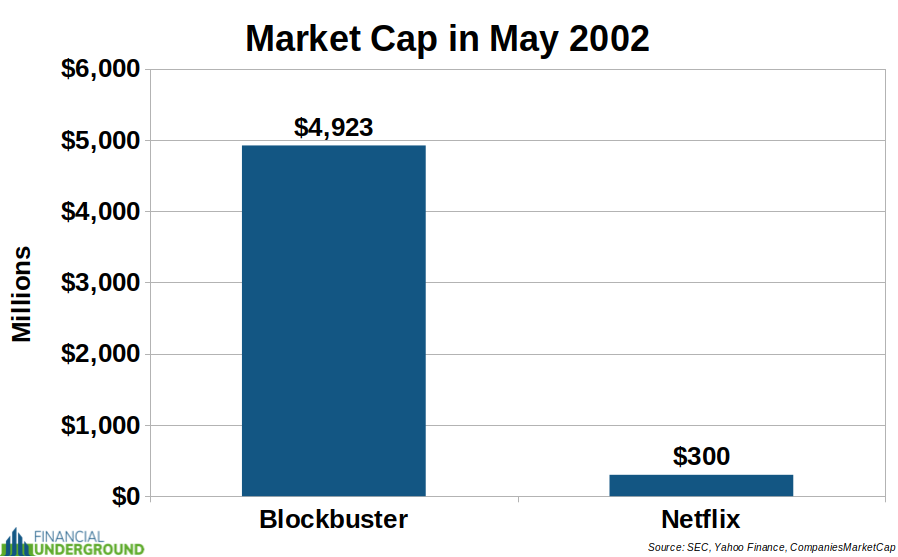


Fast forward eight years…


Blockbuster filed for bankruptcy in 2010.


Netflix didn’t just catch up—it doubled Blockbuster’s former valuation and became the undisputed king of the industry.
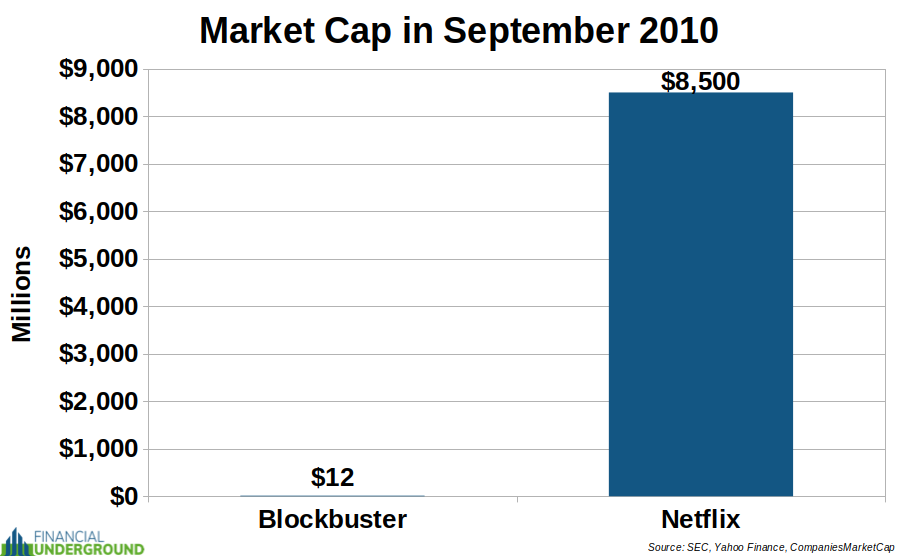


But that was just the beginning.

Netflix went on to consume the entire video rental space—and reinvent it.

By late 2021, its market cap peaked at over $305 billion—an increase of more than 3,448% from its post-Blockbuster breakout.

From its IPO, Netflix delivered a staggering 101,566% gain—or more than 1,016x.


That’s enough to turn a $1,000 investment into over $1 million.

Now, that is with the unrealistic assumption that someone could buy the Netflix IPO, hold it for nearly 20 years, and then sell at the top. And past performance is not an indication of future results for any investment.


But it powerfully illustrates what’s possible when a disruptive force doesn’t just participate in an industry—it transforms and dominates it.


Even a small, early position in the right trend can have explosive potential.


The key is to spot the disruption early, invest before the masses catch on, and hold a small enough position to ride out volatility without getting shaken out.


And that’s why we believe the Bitcoin opportunity is even bigger—by orders of magnitude.


We’re not talking about upending a video rental chain.


We’re talking about disrupting the concept of money itself.


Bitcoin has the potential to render inferior forms of money obsolete—a transformation that could reshape the entire global financial system.

This is the opportunity staring us in the face right now.


But here’s the catch:


You have to act quickly.

Remember, Bitcoin’s biggest gains tend to occur over just ten days per year. Miss those days, and you could miss out on the majority of returns.

We’re no longer in the early days of this trend.


Events are accelerating.

The window is still open—but it’s closing fast.


And when it shuts… it shuts for good.

It’s unlikely you’ll ever see an opportunity like this again.

Soon, the rest of the world will wake up to Bitcoin’s potential.


And when they do, the era of life-changing profits will be over.

That’s why the sooner you act, the better your chances of getting on the right side of this historic wealth transfer.

We’re confident that those who simply buy and hold Bitcoin will do well.

But if that’s all you do—you could miss out on the biggest and fastest gains this trend has to offer.


Gains that have the potential to radically transform your financial future.

Here’s what you need to know right now…


The Secret to Outsized Bitcoin Profits

Here’s what most people get wrong about profiting from the Bitcoin megatrend…

  • It’s NOT about buying ETFs.
  • It’s NOT about Bitcoin futures contracts.
  • It’s certainly NOT about chasing the latest altcoin or meme token.

These are the traps that snare the uninformed—rigged games where the odds are stacked heavily against the average investor.

We strongly recommend to avoid them all.

So what’s the real secret?


It’s a small group of little-known Bitcoin stocks...


Stocks that anyone can buy through a regular brokerage account.

These companies have a proven track record of massively outperforming Bitcoin during bull markets—and delivering those gains quickly.

So, while Bitcoin rising 10x (which it has done multiple times) is already impressive…


These Bitcoin stocks have the potential to rise 30x… 75x… or even more over the same period.

Of course, not every Bitcoin stock is a winner.


And as always, past performance is not indicative of future results.

That said, there’s one group of companies that consistently shows eye-popping upside potential in Bitcoin bull markets:


Publicly traded Bitcoin miners.


Why Bitcoin Miners Can Deliver Explosive Gains

Bitcoin miners are critical to the decentralized network. They validate transactions, maintain the integrity of the blockchain, and are rewarded with newly created Bitcoin and transaction fees.

In essence, Bitcoin miners are to Bitcoin what commodity producers are to gold.


Think of investing in a Bitcoin miner like a leveraged play on Bitcoin itself.

Here’s how it works:

Even a small move in the price of Bitcoin can have a dramatic effect on a miner’s bottom line—just like how junior mining stocks respond to changes in gold or silver prices.


For example:

Suppose it costs a gold miner $1,000 to produce an ounce of gold.

  • If gold drops to $900, they lose $100 per ounce.
  • If gold rises to $1,100, they earn $100 per ounce.
  • A further 9% increase to $1,200 doubles their profit to $200 per ounce.
  • And if gold doubles to $2,000? The miner’s profit explodes 10x.

That's how gold mining stocks offer leveraged exposure to the price of gold.

A similar dynamic is at work with Bitcoin and Bitcoin miners… but on steroids.


Defying the “Easy Money Trap”

Bitcoin miners are producing something unlike anything the world has ever seen...


Not just scarce, but absolutely scarce.


Bitcoin is the only commodity where higher prices cannot induce more supply, eventually lowering prices.

That means the only possible response to rising demand…


Is for the price to go up.

With every other commodity—copper, oil, lumber, gold—when prices rise, supply eventually follows.

Take copper, for example:


If copper prices go 5x or 10x, you can be sure that producers will ramp up mining operations, expand output, and flood the market—eventually driving prices back down.


Of course, the same is true of any other commodity.

That's why there is a famous saying in mining: "The cure for high prices is high prices."

This dynamic is even more profound with money.

When an asset obtains monetary properties, the natural reaction is for people to make more of it—A LOT more of it.

This is known as the easy money trap.


That's why Bitcoin is a monetary revolution.


Its supply is completely fixed.


No matter how high the price goes, no new supply can be created beyond what’s already scheduled.

In other words, Bitcoin is the first—and only—monetary asset with a supply entirely unaffected by increased demand.

That is an astonishing and game-changing characteristic.


This dynamic is what makes Bitcoin miners potentially more profitable than traditional commodity producers.


Just look at the chart below to see how Bitcoin mining stocks have historically amplified Bitcoin’s biggest moves.

Now, it's important to note again that these are some of the best examples. Not every Bitcoin stock was a big winner. And past performance is not an indication of future results for any investment.


Bitcoin miners are in the business of producing something truly extraordinary:


The hardest money mankind has ever known.


And the ones that get it right—efficient, disciplined, and well-capitalized operators—have the potential to become incredibly valuable businesses… and make their early investors very wealthy.


We believe these select stocks represent one of the last real chances to capture life-changing profits from the Bitcoin megatrend.


But before you rush to buy just any Bitcoin mining stock, let us issue a clear warning:


That could be a costly mistake.


Here’s why:


  1. Many mining stocks are pure hype. The space is flooded with low-quality, poorly run companies trying to ride the Bitcoin buzz. These “junk miners” should be avoided at all costs—they could wipe you out.
  2. The industry is brutally competitive. Bitcoin mining is a high-stakes game of razor-thin margins and extreme volatility. Only the best operators with the right infrastructure and cost advantages will survive and thrive.
  3. Timing is everything. Bitcoin is a cyclical asset. Even the best miners can get crushed if you're in at the wrong time. That’s why knowing when to buy—and when to sell—is absolutely critical.


In short, the key isn’t just finding opportunities—it’s knowing how to separate the winners from the losers… and exactly when to strike.


How We Find the Biggest Winners

So how do we consistently uncover the Bitcoin mining stocks with the highest upside potential?

The answer lies in our proprietary system: S.C.O.R.E.


We can’t share every detail of this powerful framework—it’s part of what gives our research a real edge.


But here’s what we can tell you:


S.C.O.R.E. is a five-point analysis designed to zero in on the miners with the best shot at explosive gains—while helping us avoid the pretenders.


Here’s a quick look under the hood:


SStrategic Partnerships

Does the company have relationships or alliances that give it a competitive edge?


C – Catalysts

Are there clear events or milestones coming in the next 3–6 months that could move the stock?


O – Orange-Pilled Management

Does leadership truly understand Bitcoin—or are they just chasing a trend they don’t get?


 Retention Strategy

What does the company actually do with the Bitcoin it mines? Do they hold it, sell it, or use it wisely?


E Electricity Advantage

Since energy costs can make up over 90% of a miner’s expenses, does the company have long-term access to ultra-low-cost power?


Renowned Speculator Reveals His #1 Bitcoin Stock

Bitcoin mining stocks offer some of the most breathtaking profit potential in today’s market.

But let’s be clear—making the wrong move could lead to devastating losses.


Knowing where to look, what to avoid, and when to act is the difference between seizing a once-in-a-generation opportunity… or making a crippling mistake.


Fortunately, you don’t have to figure it out alone.


We’re pulling back the curtain and giving you access to one of the most respected minds in contrarian investing—an expert in spotting global trends and getting ahead of the crowd.

His insights can give you the kind of unfair advantage most investors will never have.


Meet Nick Giambruno.


Founder of The Financial Underground and Editor-in-Chief of Financial Underground: SPECULATOR.


Nick Giambruno is a frequent speaker at investment conferences around the world.

Nick travels the world hunting for lucrative investment opportunities in markets most investors ignore or misunderstand.

He is a longtime friend and colleague of legendary investor and best-selling author Doug Casey.

Nick has been to over 60 countries and met with countless heads of state, central bankers, presidents, and prime ministers.

He has been to Zimbabwe, Lebanon, Haiti, Turkey, Argentina, Syria, Nicaragua, Bosnia, Colombia, Ukraine, Kazakhstan, Iran, and many other volatile countries most people wouldn't dare go to.

Nick’s “boots on the ground” approach gives him unique insights into what is really happening in the world and the trends that move financial markets.

He’s built a career out of identifying major global shifts before they hit the headlines—and finding smart, speculative plays with life-changing upside.

Below, we highlight some examples of the biggest wins from his personal portfolio and earlier in his investment research career.

But, of course, it is not a full track record, and not every stock was a winner. And past performance is not an indication of future results. But it gives an idea of the opportunities he is aiming for.


A Proven Track Record of Spotting Trends Early and Delivering Outsized Gains

Nick Giambruno has built his reputation on one key skill:

Identifying major investment trends before they go mainstream.

Years before most investors caught on, Nick was already positioning his model portfolio to capture the biggest asymmetric opportunities—often in sectors others overlook or dismiss.

  • He recommended taking profits after one stock soared 619%.
  • He identified a high-potential company on the day it went public—then advised selling after it surged 10x in just nine months.
  • Another early pick delivered1,021%—more than 11x—and paid out over 46% of the original investment in dividends alone.

Nick also uncovered profit potential in a misunderstood geopolitical trend in Korea—his pick went on to deliver a 5x return.

His early trend-spotting extends beyond emerging sectors to natural resources, where he's logged a string of impressive wins:

  • 117%, 139%, 183%, 289%, and 591% on niche energy companies
  • 199% on a rare metals producer
  • A 5-bagger from a well-timed gold play

Nick also invested early in a royalty company tied to the battery metals powering electric vehicles—a move that returned 595%, or nearly 7x.


These examples showcase not just isolated wins, but a consistent ability to spot powerful shifts—and profit from them before the crowd catches on.

Nick Giambruno

Nick Giambruno was also early to one of the most explosive trends in recent years:


Bitcoin mining stocks.

While most investors were confused—or completely unaware—Nick was already positioning his portfolio for major upside.


Using his proprietary S.C.O.R.E. system, he identified a handful of high-potential miners before the crowd caught on.

The results speak for themselves:

  • 203%, 205%, and 329%
  • 564%—more than 6x
  • 903%—more than 10x

And the standout?


One Bitcoin mining stock Nick recommended surged an astonishing 2,123%—more than 22x—in just 77 days.

Nick also identified a little-known, early-stage Bitcoin mining company that went on to deliver a staggering 13,794% gain.


That’s a 138x return from a single speculation.

Now, this section has just been a sample of some of the biggest wins from Nick’s personal portfolio and previous recommendations from earlier in his investment research career.

But, of course, it is not a full track record, and not every trade was a winner. And past performance is not an indication of future results.

Still, these examples are worth highlighting.


They show the kind of asymmetric opportunities Nick targets—and what can happen when you get in early on a powerful trend before the rest of the world catches on.


We should also mention that Nick “eats his own cooking.”


Nick invests his own money into the same ideas he shares in Financial Underground: SPECULATOR.

You’re not just getting research—you’re getting his best ideas, backed by real skin in the game.


We also disclose whenever we have a personal position—and give 24 hours’ notice before we sell.


Consider this your invitation to join Nick Giambruno as he continues uncovering high-potential investment trends early—and pinpoints smart speculations within them.


But don’t just take our word for it...

Here’s what some readers have said about Nick’s work:

Thank you for all you taught me and for helping me make investments that allowed me to do some things that would otherwise not have been possible.


Had I had more money to invest, I wouldn't even have to think about money now.


The important thing is that I learned what I needed to know, and that was worth every cent I paid.

-Bernadette G.

Thank you very much for your insights, in-depth explanations, and historical context. And for the profits.

-Luigi N.

I have benefited tremendously from your recommendations.

Also, out of all of the investment professionals that I follow, your process of emailing your readers at various times to take profits (or to sell for other reasons) gave me the greatest confidence in who you are as a person, as a professional, and your investment strategy.

I don't know any other subscription that offers that in the way that you did it.

-Jane B.

Nick Giambruno has provided excellent insight into serious cultural and economic issues, and I appreciate his positions on very difficult subjects.

-Phil M.


URGENT: The #1 Stock to Ride Bitcoin’s Next Big Move

Nick Giambruno’s proprietary SCORE system has pinpointed one standout Bitcoin mining company—and we believe it’s the top way to get positioned for the next major upside.

To understand why, it’s important to know: Bitcoin mining is a brutally competitive business. Only the strongest, most efficient operations will survive the cycles.

The single biggest factor determining a miner’s profitability? Electricity costs, which can account for over 90% of operating expenses.

That’s why miners with long-term access to ultra-cheap energy have a massive advantage. Everyone else? Eventually, they get priced out of the game.

This is where our top pick shines.

It has secured sustainable access to some of the lowest-cost electricity on the planet.


And in this case, the advantage could be worth a fortune.


We’ve Just Released the Full Details…

Inside our latest special report—The #1 Stock to Multiply Your Profits From Bitcoin’s Next Upside Explosion—you’ll get a complete breakdown of this high-potential Bitcoin miner.

That includes:

  • An in-depth analysis of the company
  • Why it stands out from the crowd
  • And, of course, the ticker symbols you need to know

You can get instant access to this report when you become a member of our premium investment research advisory, Financial Underground: SPECULATOR.


Risk Disclosure: All investments carry risk, and losses are possible. Past performance is not indicative of future results. The speculative strategies and ideas presented in Financial Underground: SPECULATOR are not appropriate for every investor. This is especially true for Bitcoin-related investments, which are highly volatile and can experience significant price swings in short periods. You should carefully consider your financial situation and consult with a qualified financial advisor before making any investment decisions.


Here's Everything You'll Get with Financial Underground: SPECULATOR

12 monthly issues of Financial Underground: SPECULATOR

Each month, Editor-in-Chief Nick Giambruno will deliver a brand-new issue of Financial Underground: SPECULATOR straight to your inbox.

This isn’t your typical financial newsletter.

At Financial Underground: SPECULATOR, we focus on discovering high-upside opportunities in overlooked, misunderstood, and contrarian markets—often well before they hit the mainstream radar.

We specialize in spotting unstoppable trends early and positioning ourselves for outsized gains.

You won’t find this perspective in the financial media—or even in most premium investment services.

Here’s what your membership includes:

  • Monthly Issues with Nick’s top speculative ideas and detailed analysis
  • Ongoing Portfolio Updates to keep you fully informed on every move we make
  • Special Research Reports that zero in on high-conviction plays
  • A Model Portfolio with clear buy and sell ratings—investments anyone can make through a regular brokerage account
  • 24/7 Access to the members-only website with all back issues, reports, and resources
  • BONUS: The Financial Underground Weekly Briefing – exclusive insights to help you stay ahead of global macro and market developments

You don’t need to be an expert or a Wall Street insider. We give you actionable, easy-to-follow research aimed at helping you spot asymmetric opportunities before the crowd catches on.


And That’s Not All…

As a new member, you’ll also receive IMMEDIATE access to 7 Bonus Reports, including:

  • The name and ticker symbol of our #1 Bitcoin mining stock
  • How to use Bitcoin in the most private and sovereign ways possible
  • The #1 gold stock to own right now
  • Three niche market plays to profit from the coming “Monetary Reset”
  • A high-upside speculation in a misunderstood rare commodity
  • A tiny silver stock with explosive potential
  • How to save, invest, and speculate when the money is broken

Bonus Report #1

The #1 Stock To Multiply Your Profits From Bitcoin’s Next Upside Explosion

We believe Bitcoin is primed for another major leg up—and a select group of miners could surge even higher.


Using his proprietary SCORE system, Nick Giambruno has identified what we believe to be the single best-positioned Bitcoin mining stock on the market.


This urgent report reveals the company’s name, ticker symbol, and full analysis—and it’s yours FREE as a new member.

Bonus Report #2

Your Guide to Total Financial Sovereignty With Bitcoin

In this exclusive guide, we are slicing through all the noise to bring you pure signal on the best ways to use Bitcoin to obtain total sovereignty over your money.

This guide could save you many days—and perhaps months—by immediately identifying today’s best methods and how to use them.

Inside, you’ll discover:

  • How Bitcoin Becomes the World’s Dominant Money
  • 6 Essential Strategies To Avoid the Most Common Fatal Mistakes
  • How To Turn Bitcoin’s Volatility in Your Favor
  • Where To Buy Bitcoin
  • How To Hold Bitcoin With Self-Custody Wallets
  • Advanced Storage Options: Cold Storage, Hardware Wallets, and Multisig Wallets
  • How Full Nodes Free You From Any Third Party
  • How To Accept Bitcoin For Your Business
  • The Best Privacy Practices
  • And Much More…

As the landscape evolves, this guide will be regularly updated with the latest best practices.


Bonus Report #3

The #1 Gold Stock to Own Right Now

With currency debasement accelerating, gold is back in the spotlight.

This special report reveals a low-risk, high-upside gold company that mitigates many of the risks of the mining sector—while retaining massive upside potential.

We believe it’s the top gold stock for today’s inflationary environment.


Bonus Report #4

Silver Spike—The Tiny Stock Set To Soar

All the forces are aligning for a massive silver bull run—and one under-the-radar stock is uniquely positioned to benefit.


This company remains overlooked by big money—for now.


But as silver prices climb and the company executes, investor interest could flood in.


Get all the details inside this exclusive report.


Bonus Report #5

Be on the Right Side of the Largest Wealth Transfer in History

We believe a once-in-a-century economic event is about to unfold.


In the coming crisis and monetary reset, wealth won’t disappear—it will simply change hands.


This report shows you how to position yourself on the winning side, including three trades you can make through any regular brokerage account.


Bonus Report #6

Explosive Profits From the Next Energy “Supercycle”

Nick has identified a niche, overlooked commodity with a history of massive boom-and-bust cycles.


One company in the last cycle delivered a 1,000x return—turning a $1,000 investment into nearly $1 million.


That's a rare and unique example from the best-performing company in the industry. And, of course, past performance does not indicate future results. However, it illustrates the explosive nature of this commodity.


This report explains why the next supercycle may already be underway—and reveals the company we believe offers the most upside today.


Bonus Report #7

The Wealth Survival Strategy

With the US dollar losing purchasing power at an alarming rate, protecting your wealth is more urgent than ever.


This special report presents a simple, powerful framework for saving, investing, and speculating in a world of broken money and rising inflation.


It’s your roadmap for preserving—and growing—wealth in uncertain times.

Get Access Right Now

Activate Your Subscription to Financial Underground: SPECULATOR

Unlock instant access to premium reports, expert investment research, our model portfolio, and more.

Simply click the Subscribe Now button below to join our elite circle of investors.

Here’s What You’ll Receive as a Member of Financial Underground: SPECULATOR:

  • 12 Monthly Issues – In-depth, actionable research delivered straight to your inbox every month
  • Full Access to Our Model Portfolio – Including all current open positions and updates
  • Bonus Report #1: The #1 Stock to Multiply Your Profits From Bitcoin’s Next Upside Explosion
  • Bonus Report #2: The #1 Gold Stock to Own Right Now
  • Bonus Report #3: Silver Spike – The Tiny Stock Set to Soar
  • Bonus Report #4: Be on the Right Side of the Largest Wealth Transfer in History
  • Bonus Report #5: Explosive Profits From the Next Energy “Supercycle”
  • Bonus Report #6: Your Guide to Total Financial Sovereignty With Bitcoin
  • Bonus Report #7: The Wealth Survival Strategy
  • BONUS Weekly Briefing – Timely insights and updates from The Financial Underground team

This Level of Investment Research Is Rarely This Accessible

High-level investment insights like these are typically reserved for hedge funds, elite investors, and the ultra-wealthy.

Frankly, we wouldn’t be surprised if institutions paid tens of thousands for the kind of niche, high-upside research you’ll find in Financial Underground: SPECULATOR.

But today, you don’t have to.

Normally, a full year of Financial Underground: SPECULATOR is priced at $2,499. That’s the rate available on our main website—and still a bargain considering the potential payoff of just one winning trade.

At under $7 a day, it costs less than lunch… but could deliver life-changing returns.

However, we’re offering something special right now—but only for a select few.


Act Fast—This Offer Closes After the First 7 People Join

Here’s why:

Many of the speculative opportunities we share involve small, thinly traded stocks. If too many people jump in, prices could move quickly—and the upside could vanish.

That’s why we have to cap access.

If you’re among the first 7 to act today, you’ll get $700 off your subscription.


That brings your price down to just $1,799 per year—less than $5 a day.


It’s a one-time deal we may never offer again.

Once those 7 spots are filled, this discount disappears—and we can’t guarantee when or if it will return.


Lock In Your Discount for Life

When you subscribe today, not only will you secure the $700 discount—you’ll also lock it in for life.

That means you’ll renew every year at this ultra-low rate, even if the public price increases.

Click the button below to activate your subscription and gain instant access to everything Financial Underground: SPECULATOR has to offer.

We’re confident you’ll see the value immediately.


money back

30 day Guarantee

30-Day Money-Back Guarantee

We’re confident you’ll love what you find inside Financial Underground: SPECULATOR.


But to make your decision even easier, we’re offering a 30-day satisfaction guarantee.

If you’re not completely satisfied for any reason, just contact us within the first 30 days and we’ll refund your payment—minus a $500 “tire kicker” fee.

Why the fee?

Unfortunately, a small number of people sign up, access our proprietary research, and request a refund. That’s not fair to you—or to us.

The $500 fee helps protect the value of our work while still removing the vast majority of the risk for you.

In short, you can explore everything Financial Underground: SPECULATOR has to offer—with most of your risk off the table.


The One Thing You Need to Do Right Now

This moment demands immediate attention.

Historically, Bitcoin’s biggest gains have come in short bursts—just ten days a year account for the lion’s share of upside.


And when those moves happen, they’re fast and furious.

We believe the next surge could be just around the corner.

That’s why so many people miss out—they hesitate, they delay… and by the time they act, the window has slammed shut.

In situations like this, timing is everything.

To capture the full potential of this opportunity, you must be positioned before the next move begins. Wait too long—even by a day—and you could miss out entirely.

Here’s the key takeaway:

Based on past cycles, we wouldn’t be surprised if select Bitcoin mining stocks once again delivered exponential gains—far outpacing Bitcoin itself.

Just look at the chart below to see how these miners performed during the last bull market. The potential is real. And it’s unfolding now.


The Best Bitcoin Stock Delivered Over 100x Gains—In Just Over a Year

One Bitcoin stock soared an astonishing 10,118% in a little over 12 months.

That’s more than 100x your money—enough to turn a $5,000 investment into over $500,000… in a matter of months.

Now compare that to Bitcoin itself during the same time frame:

A $5,000 investment in Bitcoin would have grown to $57,300.

Impressive? Sure.

But it's just a fraction of what was possible with the right speculative stock riding the same trend.

Let’s be clear: these were the best examples. Not every Bitcoin stock delivered these kinds of results, and past performance is not a guarantee of future returns.

Still, this illustrates the kind of asymmetric opportunities we seek out in Financial Underground: SPECULATOR.


The best Bitcoin stock delivered an eye-popping return of 10,118% in a little over a year—a gain of over 100x.  

That’s enough to turn every $5,000 invested into more than $500,000 in a matter of months.

By contrast, $5,000 invested into Bitcoin over the same period would have turned into just $57,300.

That's nothing to sneeze at, of course.

But it’s also a mere fraction of what could have been made on the same trend by instead putting your money into a smart speculation.

Now, it’s important to note these were the best examples. Not every Bitcoin stock was a big winner. And past performance is not an indication of future results for any investment.

However, it illustrates the opportunities we aim for in Financial Underground: SPECULATOR.

Here's the bottom line, though.

Select Bitcoin stocks have the potential to dramatically outperform Bitcoin itself—and they tend to move fast.

We believe the best way to position for Bitcoin’s next major move is by owning the #1 Bitcoin mining stock uncovered by Nick Giambruno’s proprietary S.C.O.R.E. system.

All the details are in our urgent report:

The #1 Stock To Multiply Your Profits From Bitcoin’s Next Upside Explosion

You can get instant access when you join Financial Underground: SPECULATOR today.

But timing is critical…

This is no longer the beginning of the trend.

Events are accelerating. The window of opportunity is narrowing quickly—and once it slams shut, it may never open again.

Institutional investors, major corporations, and even governments are waking up to Bitcoin’s role in the new financial order.

When they act, the easy profits will be gone.


There's another critical reason not to delay…

Only the first 7 people who subscribe today will receive the special $700 discount on their annual membership.

If you’re still reading this, chances are there are still spots left.

But they won’t last.

Don’t miss what could be your final shot at life-changing gains from the Bitcoin megatrend.

Click the Subscribe Now button below to get started.

We look forward to welcoming you inside.


Sincerely,

The Financial Underground


P.S. Time Is of the Essence

Bitcoin’s biggest gains have historically come during just ten explosive days each year.

These moves tend to happen fast—often catching the majority of investors flat-footed.

That’s why so many people miss out on life-changing profits… and regret it later.

We believe the next big move could be right around the corner.

That’s why getting positioned before it happens is absolutely critical.

In fast-moving markets like this, even a short delay could mean missing the window entirely—and watching the opportunity vanish.

Don’t wait.


Click the button below to access our research and see exactly how to get positioned now.